
U.S. Open Paintings and Prints
The USGA's national championship, played since 1895 on America's most demanding courses.
The U.S. Open is the national championship of American golf, conducted by the United States Golf Association. The first was played in 1895 at Newport Country Club in Rhode Island, the same week as the first U.S. Amateur, and was won by Horace Rawlins. It is open, as the name says, to any professional or qualified amateur who can earn a place, and thousands enter local and final qualifying each year for a spot in the field.
The U.S. Open is known for being the hardest test in golf. The USGA prepares its courses with narrow fairways, deep rough and firm, fast greens, and the winning score is often close to par. It moves among a small group of great courses, many of which have hosted it several times: Oakmont has hosted ten U.S. Opens, and Pebble Beach, Winged Foot, Shinnecock Hills and Oakland Hills six each.
Many of the courses in Linda Hartough's collection are U.S. Open courses, and her connection to the championship is a long one. In 1989 the USGA commissioned her to paint the first of 25 U.S. Open course paintings. The first painting completed was the 13th Hole at Medinah, for the 1990 U.S. Open.
Prints in the collection named for a specific U.S. Open include the 13th at Medinah (1990), the 16th at Shinnecock Hills (1995), the 16th at Oakland Hills (1996), the 17th at Congressional (1997), the 12th at Southern Hills (2001), the 4th at Bethpage Black (2002), the 12th at Olympia Fields (2003), the 9th at Shinnecock Hills (2004), the 9th at Winged Foot (2006), the 14th at Oakmont (2007), the 3rd at Torrey Pines (2008), the 17th at Bethpage Black (2009), the 9th at Pebble Beach (2010), the 10th at Congressional (2011), the 8th at the Olympic Club (2012), the 16th at Merion (2013), the 9th at Pinehurst No. 2 (2014) and the 9th at The Country Club (2022).
The prints
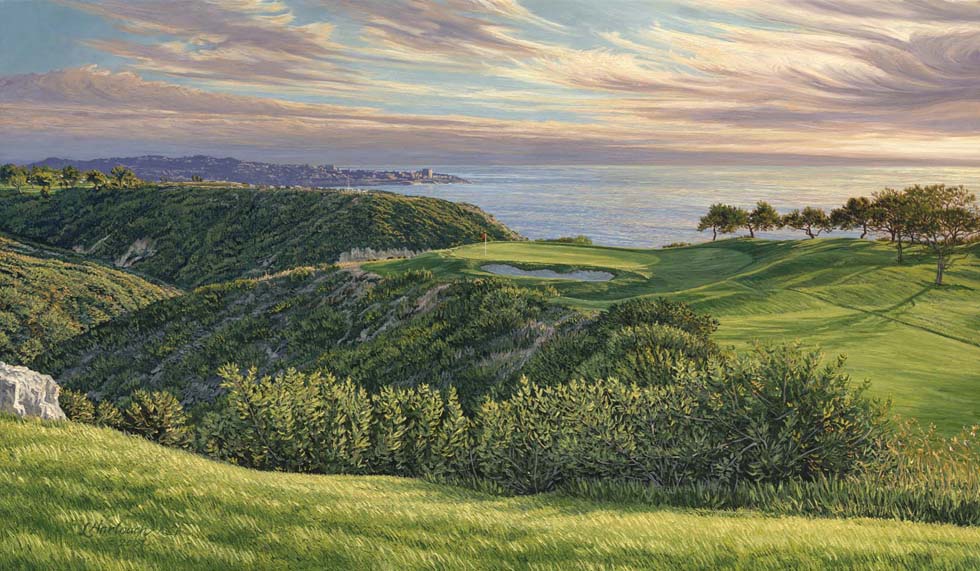
#3 Torrey Pines South Course, 2008 U.S. Open Championship
The 3rd at Torrey Pines South is a breathtaking par-3 where Pacific Ocean views compete with the challenge below. The downhill tee shot must carry deep bunkers to reach a green perched above the coastline. Ocean breezes add complexity to club selection, while the putting surface’s subtle breaks demand precision. This iconic hole perfectly blends natural beauty with tactical demands.
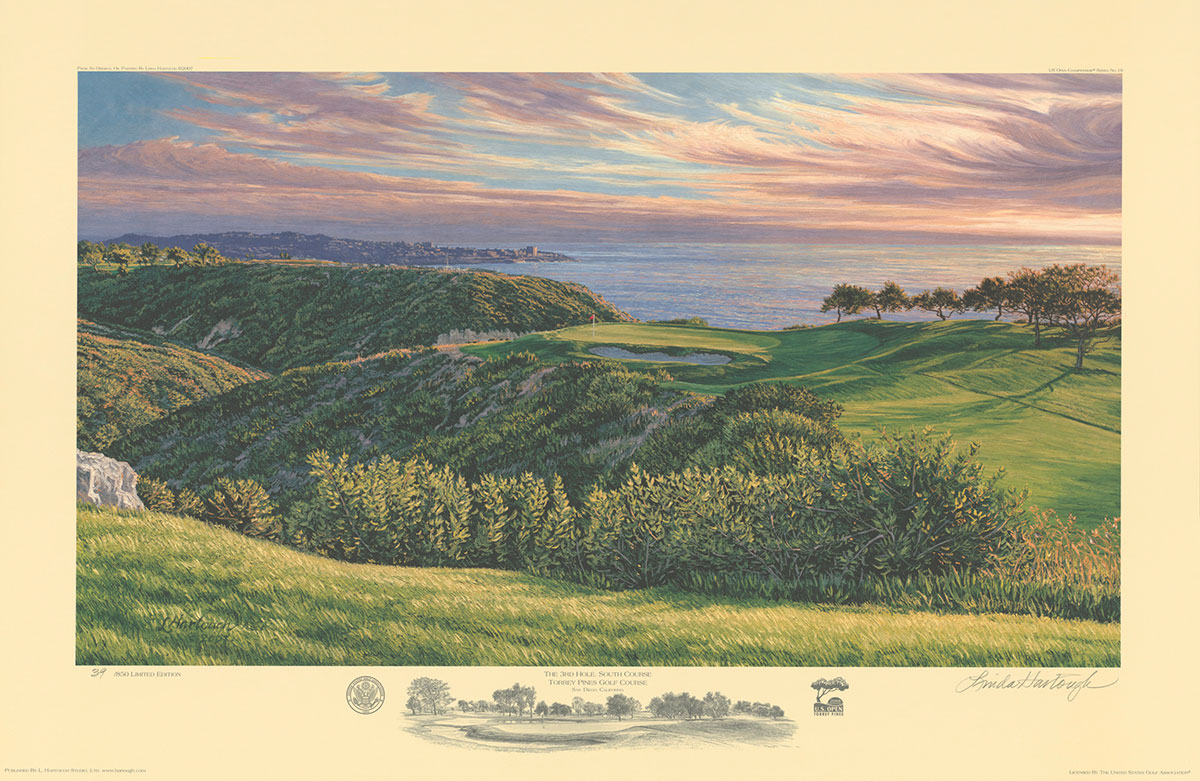
#3 Torrey Pines South Course, 2008 U.S. Open Championship
The 3rd at Torrey Pines South is a spectacular par-3 where stunning Pacific vistas frame one of golf’s most picturesque challenges. The elevated tee overlooks crashing waves below, but focus is essential as the downhill shot must navigate strategic bunkers protecting the green. Coastal winds swirl unpredictably, testing club selection and execution. The undulating putting surface rewards only the most precise iron play, making this hole a true test of skill.
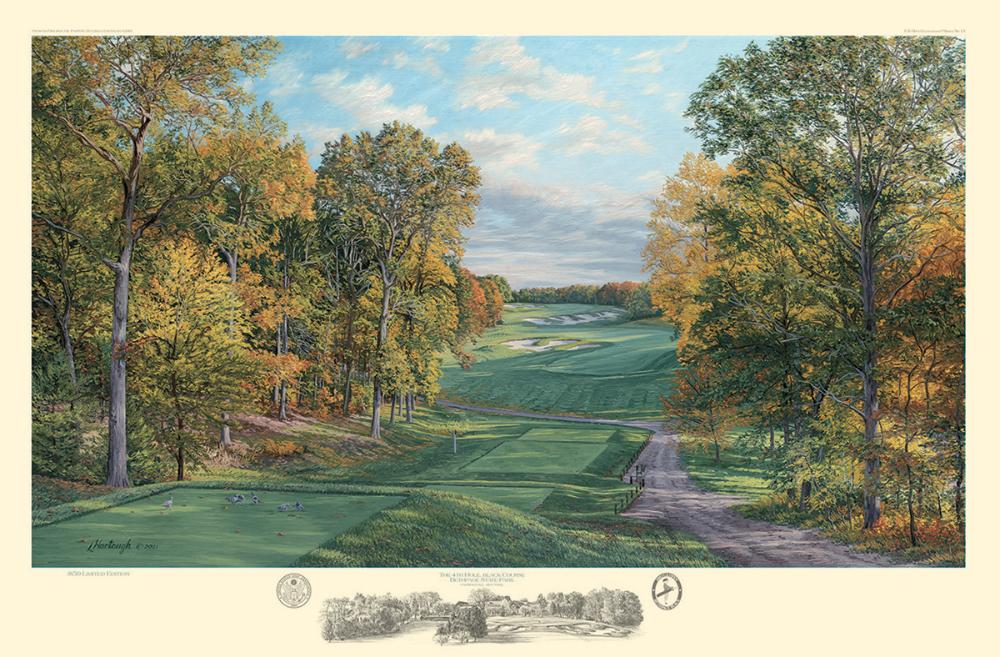
#4 Bethpage Black, 2002 U.S. Open Championship
The 4th hole at Bethpage Black stands as one of the most feared par-5s in championship golf, a 515-yard examination that separates pretenders from contenders. This iconic hole has humbled professionals and amateurs alike.
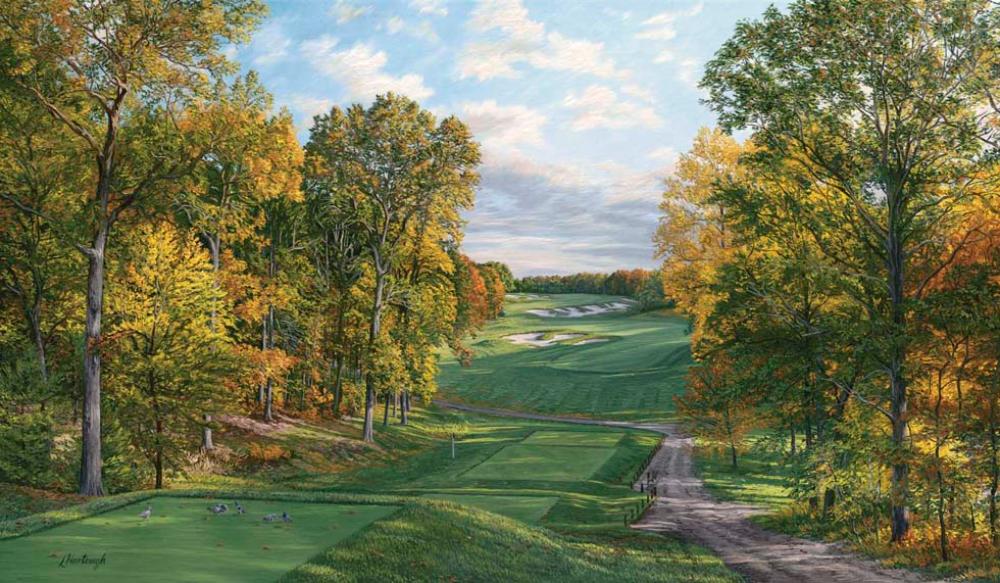
#4 Bethpage Black, 2002 U.S. Open Championship
This par-5 monster showcases everything intimidating about this legendary course. Stretching over 500 yards, this brute demands both power and precision from start to finish. This hole embodies Bethpage Black’s unforgiving nature.
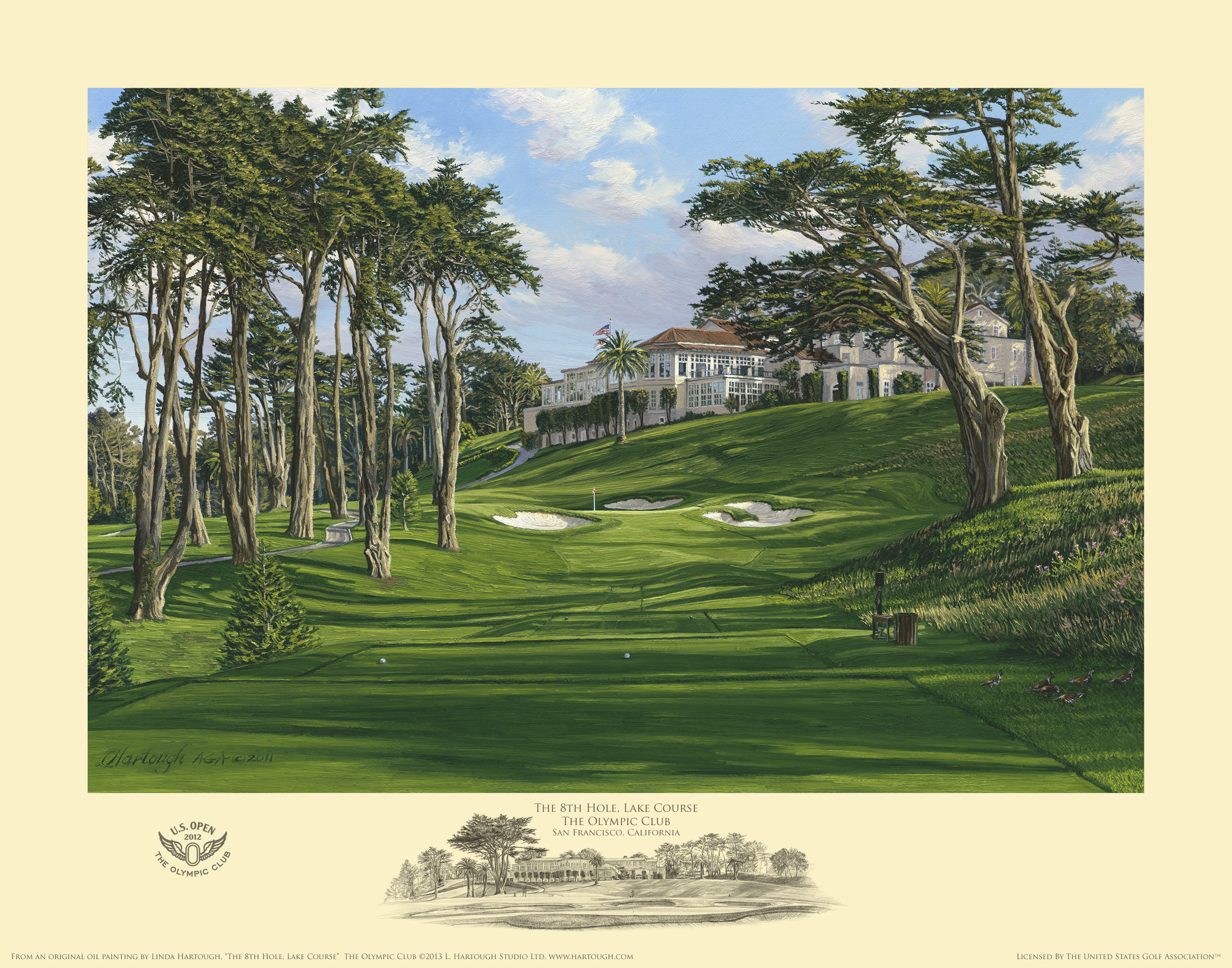
#8 Olympic Club Lake Course, 2012 U.S. Open Championship
The 8th hole at the Olympic Club’s Lake Course is a demanding par-3 that tests both accuracy and nerve. Playing uphill, the green is well-protected by deep bunkers and subtle slopes that challenge even the best short-game players. With towering trees framing the hole, the 8th is a classic example of Olympic Club’s ability to blend beauty with relentless difficulty.
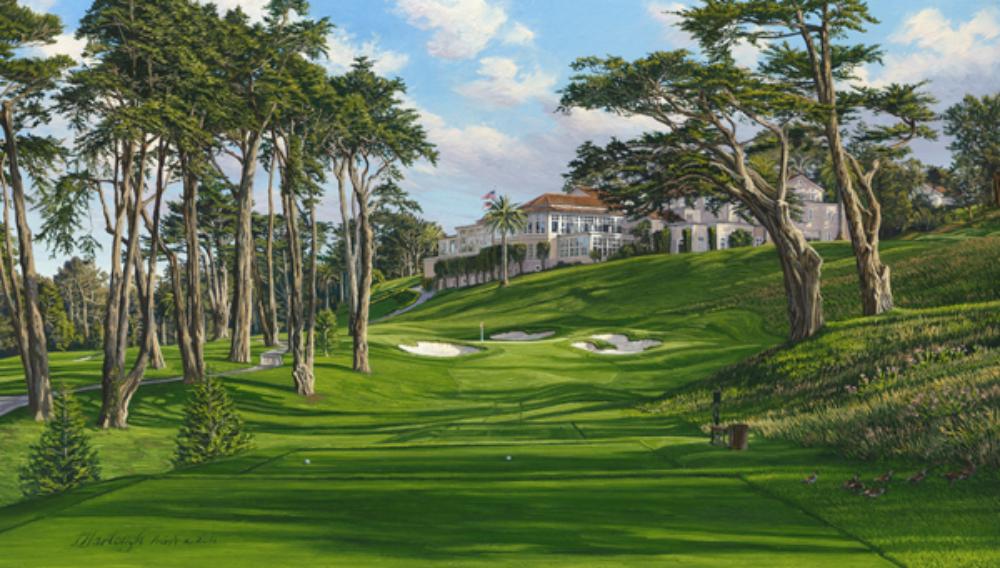
#8 Olympic Club Lake Course, 2012 U.S. Open Championship
The 8th at the Olympic Club’s Lake Course is a par-3 that demands precision and nerve. Playing downhill to a green surrounded by towering trees and guarded by deep bunkers, this hole is as visually striking as it is challenging. The green’s subtle undulations and the ever-present coastal breezes add layers of complexity, making club selection and accuracy critical.
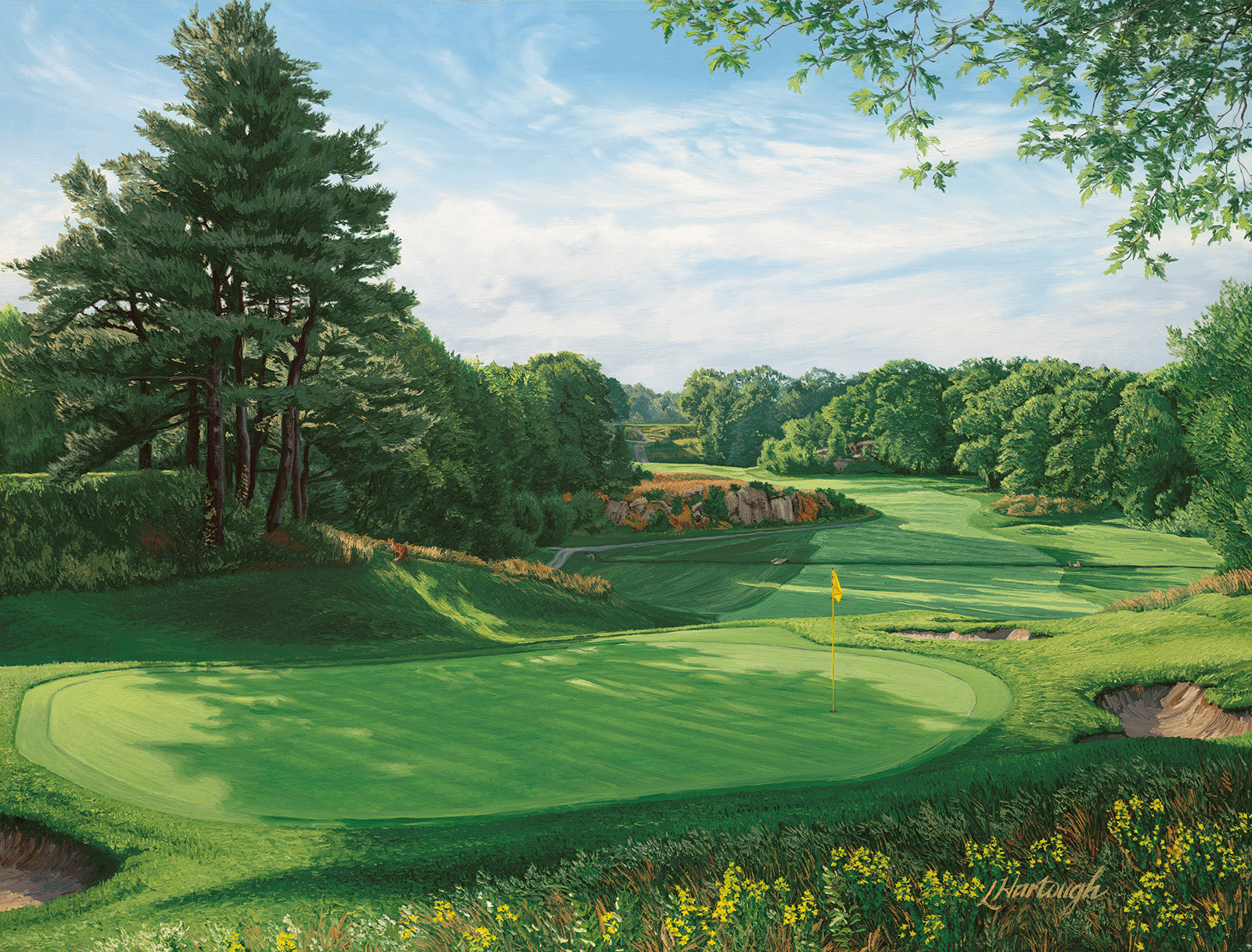
#9 (#10 2022 U.S. Open) The Country Club at Brookline MA
The 9th at The Country Club is a demanding par-4 that has challenged golf’s greatest players for generations. The drive must navigate strategically placed bunkers to find the ideal position on the rolling fairway. From there, the approach shot requires precise distance control to an elevated green protected by deep sand and collection areas. Subtle green contours make putting treacherous, rewarding only the most thoughtful shots.
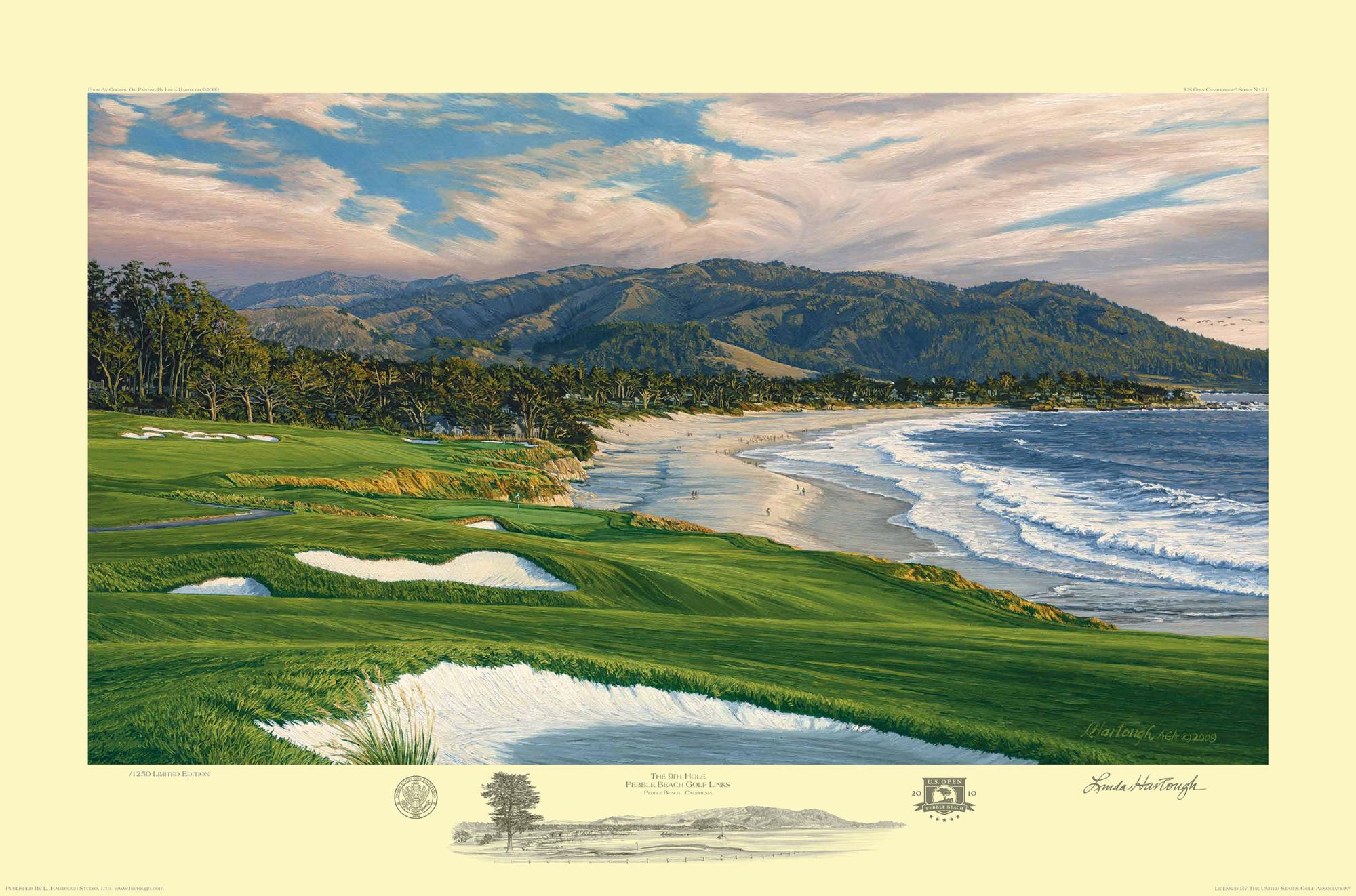
#9 Pebble Beach Golf Links, 2010 U.S. Open Championship
Standing on the 9th at Pebble Beach, it feels as though the earth has paused just for you. The mountains rise, the ocean stretches, and the seagrass sways in rhythm with the breeze. And above it all, the sky paints a new masterpiece with every passing moment.
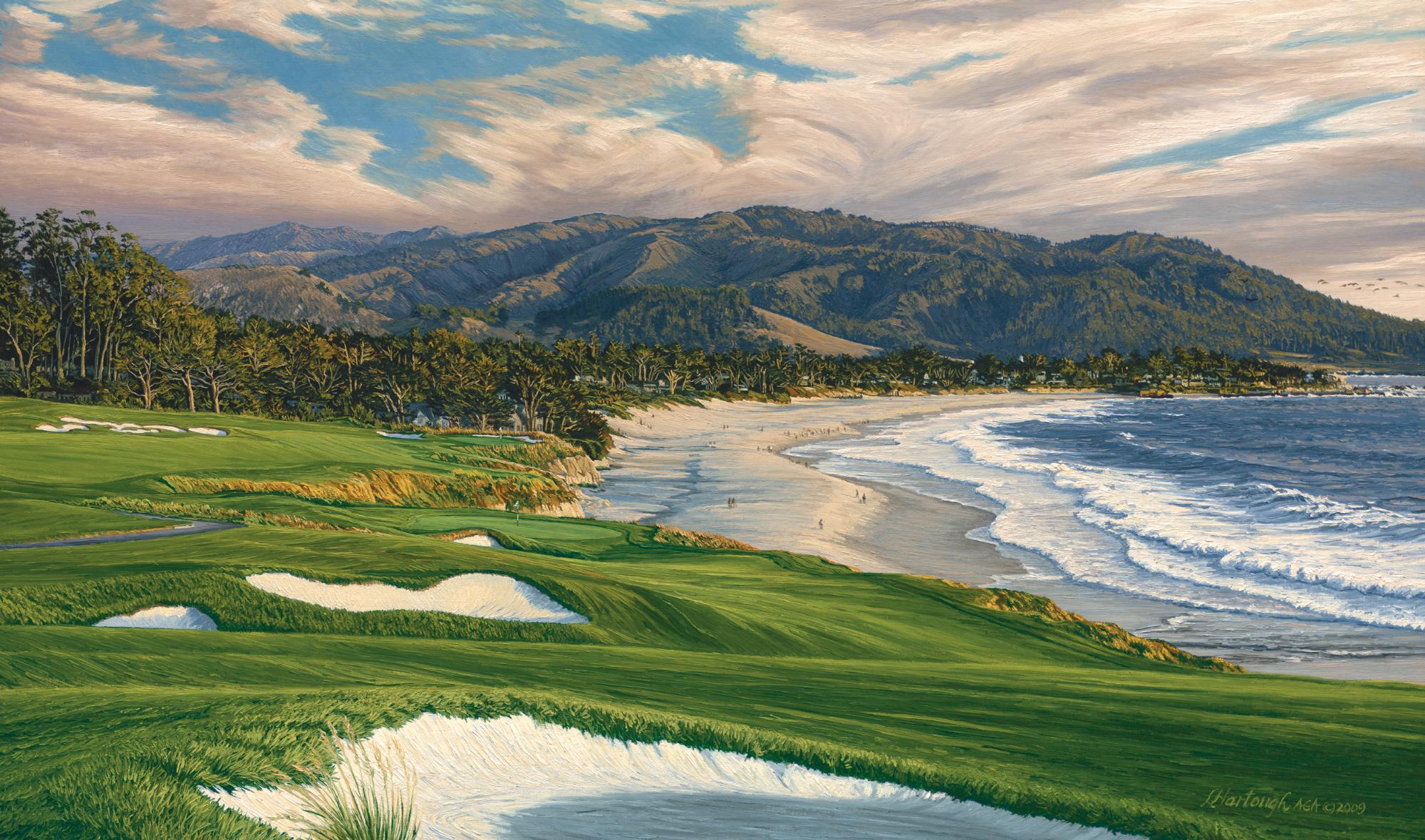
#9 Pebble Beach Golf Links, 2010 U.S. Open Championship
When all the world seems at your feet, on the 9th hole at Pebble Beach, the moment is hard to take in all at once. Mountain, ocean, sand, and seagrass – what could possibly be missing? Oh yes, that sky. It’s different every time.
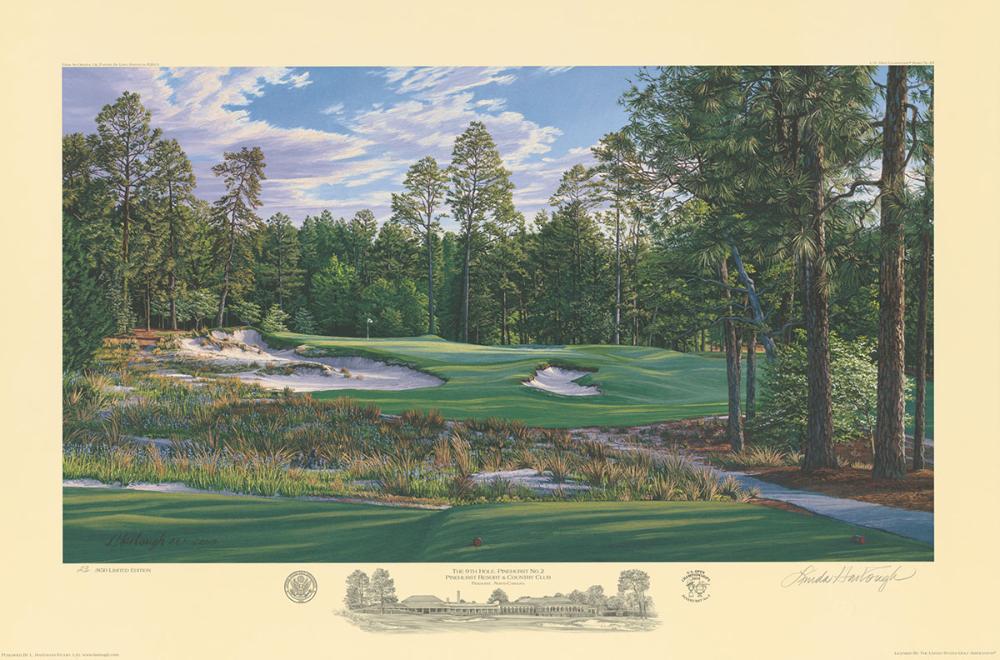
#9 Pinehurst No. 2, 2014 U.S. Open Championship & U.S. Open Women’s Championship
This uphill par-3 appears deceptively straightforward until you factor in Donald Ross’s signature crowned green, which acts like a natural fortress against imperfect shots. What makes this hole truly special is how it rewards precision while punishing the slightest miscalculation – balls that miss the target find themselves in the surrounding collection areas.
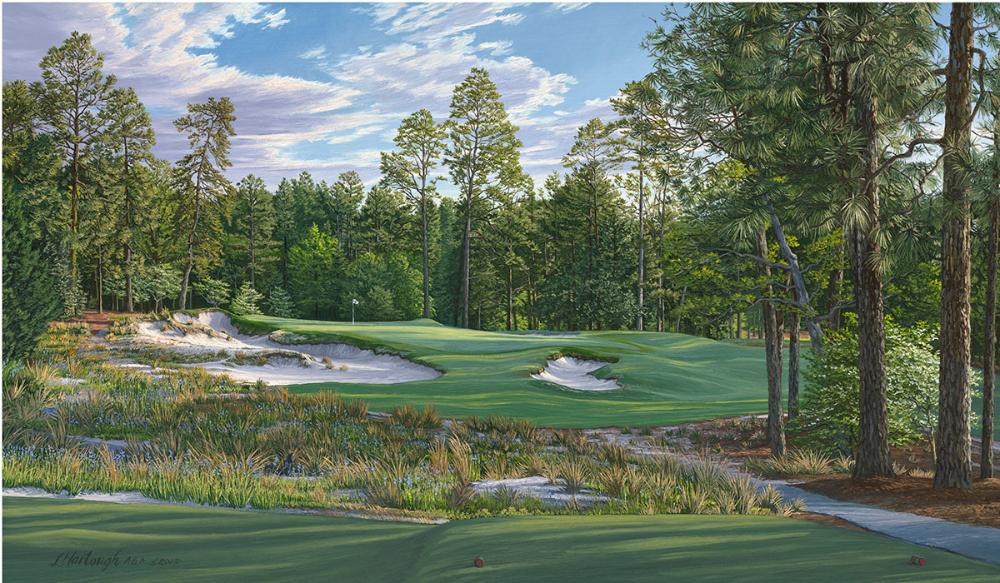
#9 Pinehurst No. 2, 2014 U.S. Open Championship & U.S. Open Women’s Championship
The 9th at Pinehurst No. 2 is a par-3 that showcases Donald Ross’s genius for creating deceptively simple yet profoundly challenging holes. With its subtle beauty and strategic demands, the 9th is a quintessential Pinehurst experience, blending artistry and challenge in equal measure.
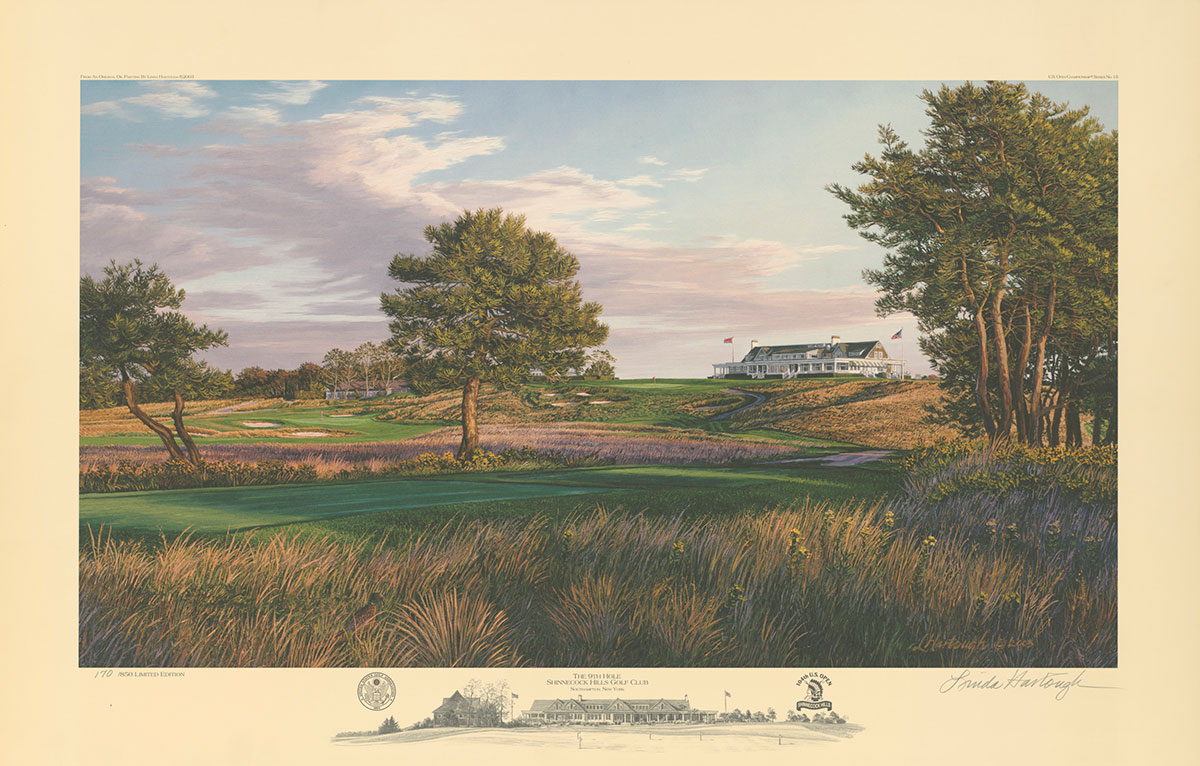
#9 Shinnecock Hills Golf Club, 2004 U.S. Open Championship
The 9th at Shinnecock Hills is a visually striking par-4 that showcases the course’s natural beauty while testing every aspect of your game. The tee shot must find the narrow fairway amid rolling fescue and strategically placed bunkers. From there, the approach demands pinpoint accuracy to a firm, elevated green that sheds imprecise shots. Wind adds complexity to club selection, making this hole a true championship test.
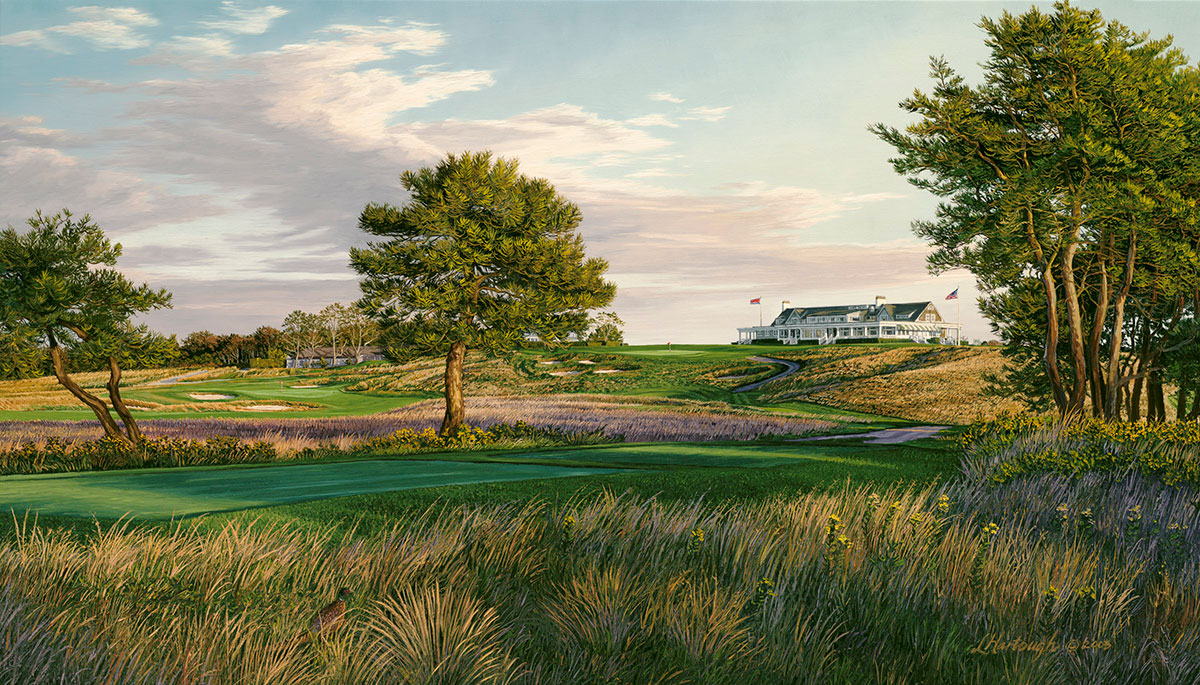
#9 Shinnecock Hills Golf Club, 2004 U.S. Open Championship
The 9th at Shinnecock Hills is a demanding par-4 where strategic positioning off the tee sets up everything that follows. Fairway bunkers and native grasses punish wayward drives, while the approach to the elevated green requires precise distance control. The putting surface’s subtle undulations challenge even perfect approach shots. This iconic hole embodies Shinnecock’s windswept character and unforgiving nature.
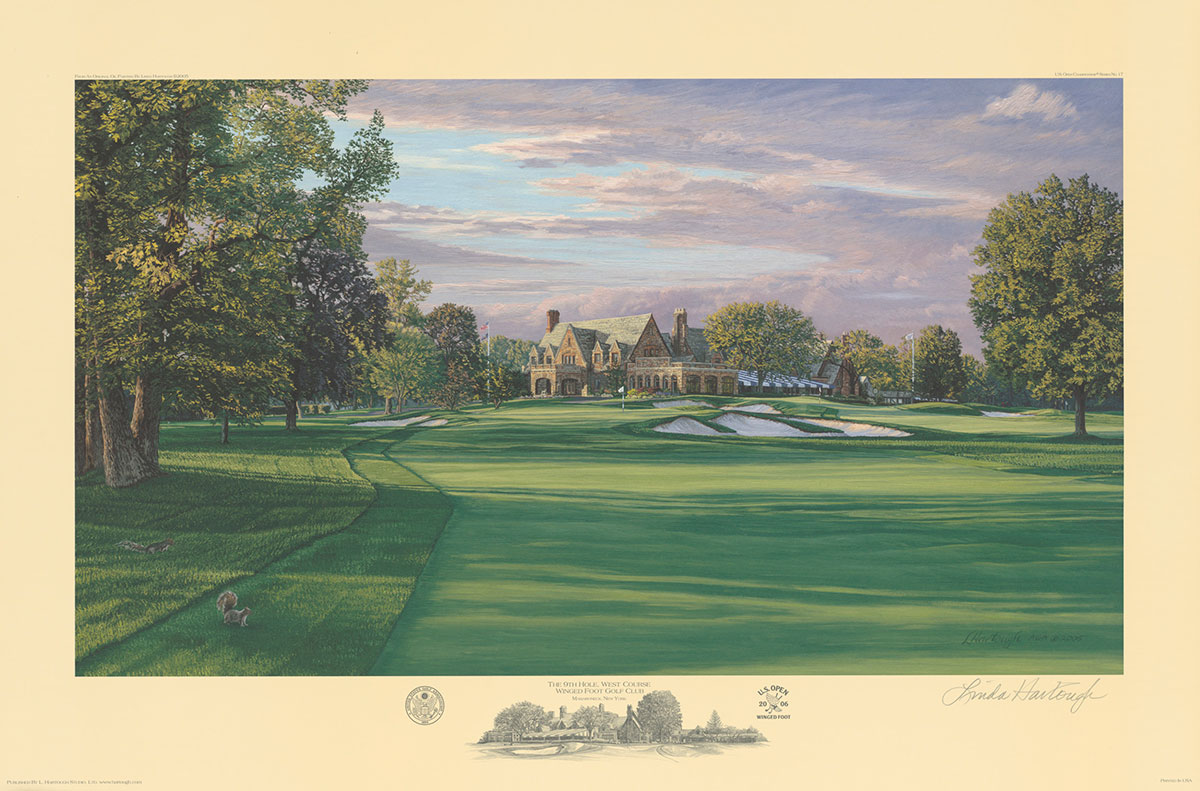
#9 Winged Foot, 2006 U.S. Open Championship
The 9th at Winged Foot is a visually imposing par-4 where every shot demands surgical precision. The drive must thread between strategically placed bunkers to find the narrow fairway corridor. From there, the approach to the fortress-like green requires perfect club selection and flawless execution, as deep sand guards all angles. Rolling putting surfaces punish even slight misreads. This masterpiece showcases Winged Foot’s uncompromising design philosophy.
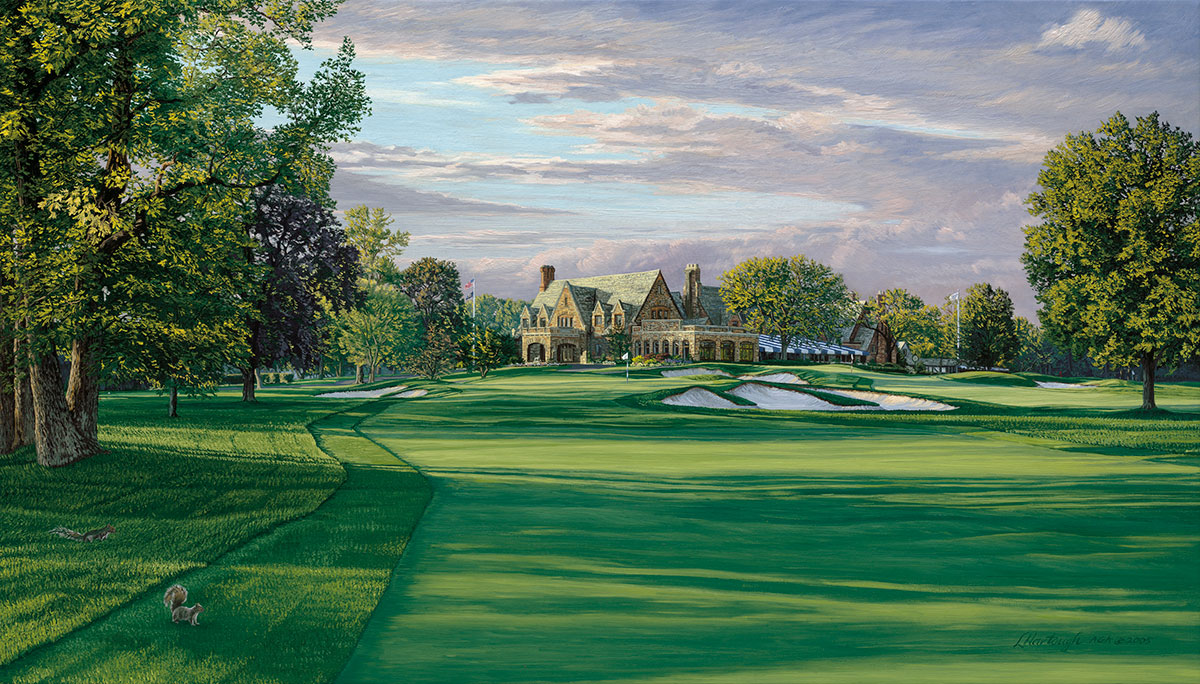
#9 Winged Foot, 2006 U.S. Open Championship
The 9th at Winged Foot is a punishing par-4 that epitomizes the course’s demanding character. Strategic positioning off the tee is crucial to avoid deep fairway bunkers and set up the proper approach angle. The elevated green is heavily defended by sand and requires precise distance control on firm surfaces. Even perfect approach shots face treacherous putting on subtle slopes. This iconic hole rewards only flawless execution.
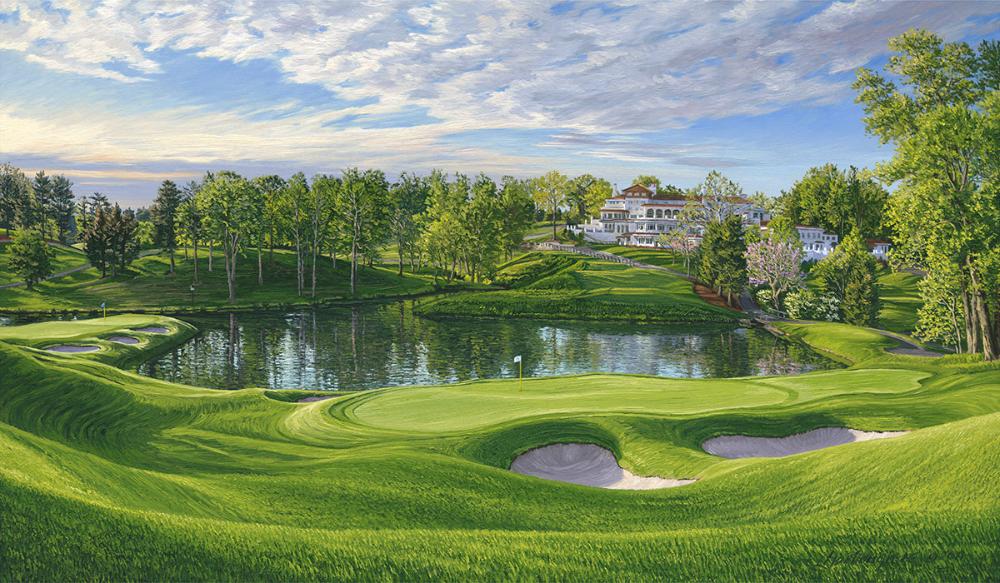
#10 Congressional Country Club Blue Course, 2011 U.S. Open Championship
The 10th at Congressional’s Blue Course is a par-3 that combines beauty with brute strength. Known for its role in major championships, the 10th is a test of nerve and skill, embodying the grandeur and difficulty of Congressional’s storied layout.
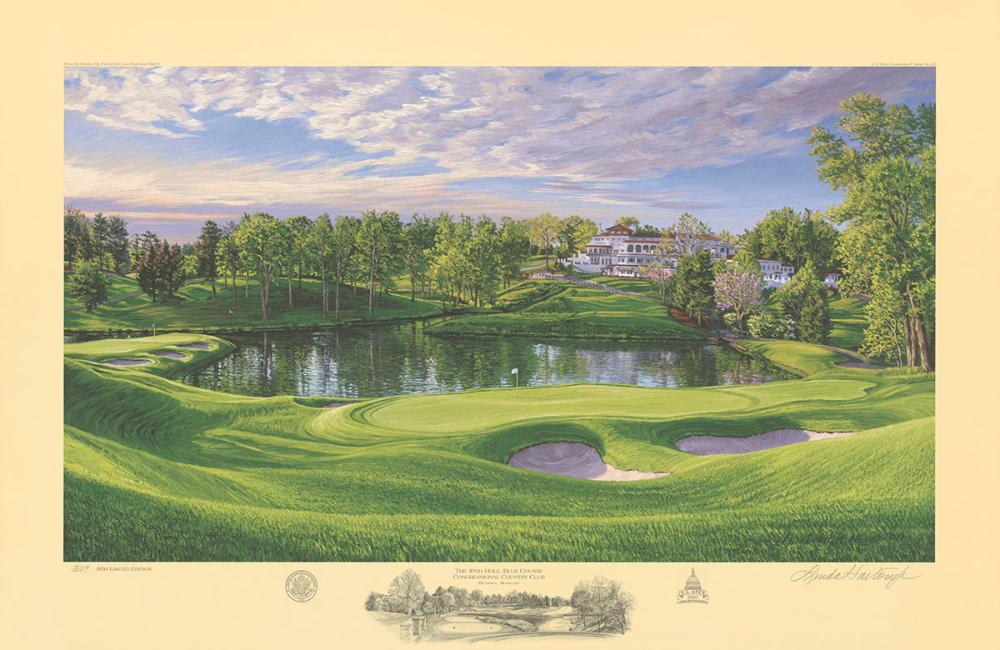
#10 Congressional Country Club Blue Course, 2011 U.S. Open Championship
The 10th at Congressional’s Blue Course is a demanding downhill par-3 that has shaped the destiny of major championships with its deceptive beauty and unforgiving design. This hole has witnessed both triumph and heartbreak.
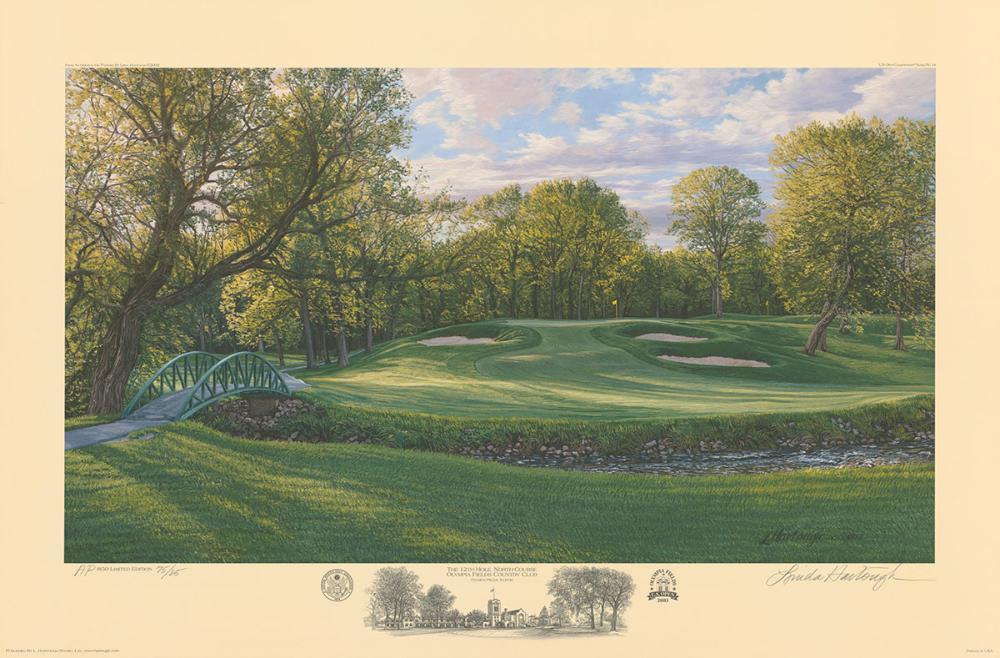
#12 Olympia Fields North Course, 2003 U.S. Open Championship
This hole begins with a demanding tee shot, where accuracy is key to avoid the tree-lined fairway and strategically placed bunkers. The approach shot is equally challenging, as the green is well-protected by bunkers and features subtle undulations that make putting a true test of skill. The 12th is a standout hole that embodies the championship pedigree of Olympia Fields.
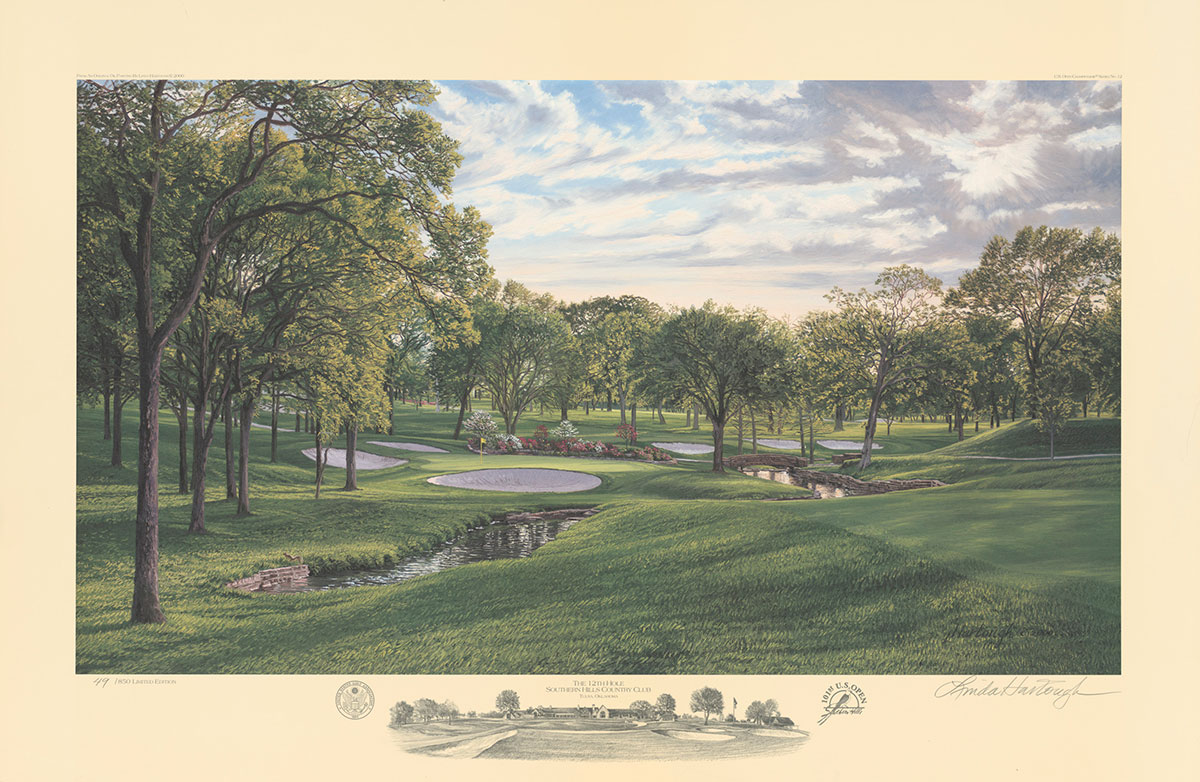
#12 Southern Hills, 2001 U.S. Open Championship
The 12th at Southern Hills is a strategic par-4 that demands both power and precision. The tee shot must navigate well-placed fairway bunkers that define the ideal landing area. From there, the approach requires pinpoint accuracy to a green protected by deep bunkers and subtle slopes. This hole epitomizes Southern Hills’ blend of classic design and modern challenge.
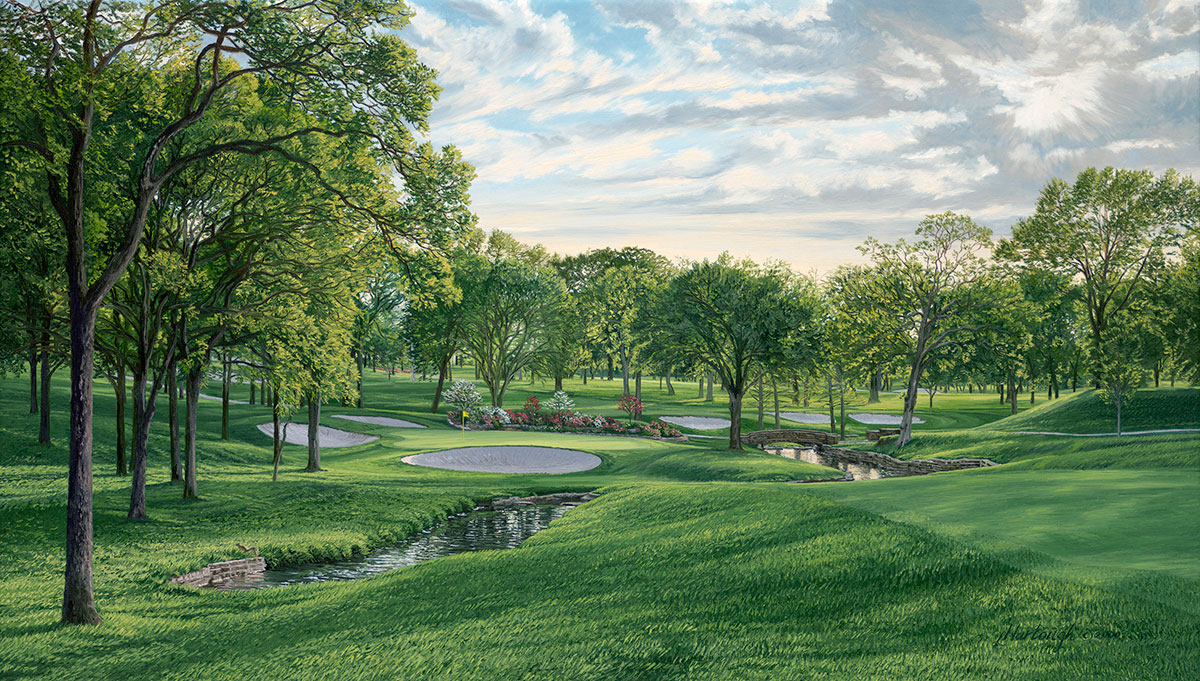
#12 Southern Hills, 2001 U.S. Open Championship
The 12th at Southern Hills is a demanding par-4 where strategy meets execution. The drive must thread between perfectly positioned fairway bunkers that punish wayward shots. The approach shot to the elevated green requires club precision, as steep-faced bunkers and collection areas await errant balls. This hole rewards thoughtful play while punishing aggressive mistakes.
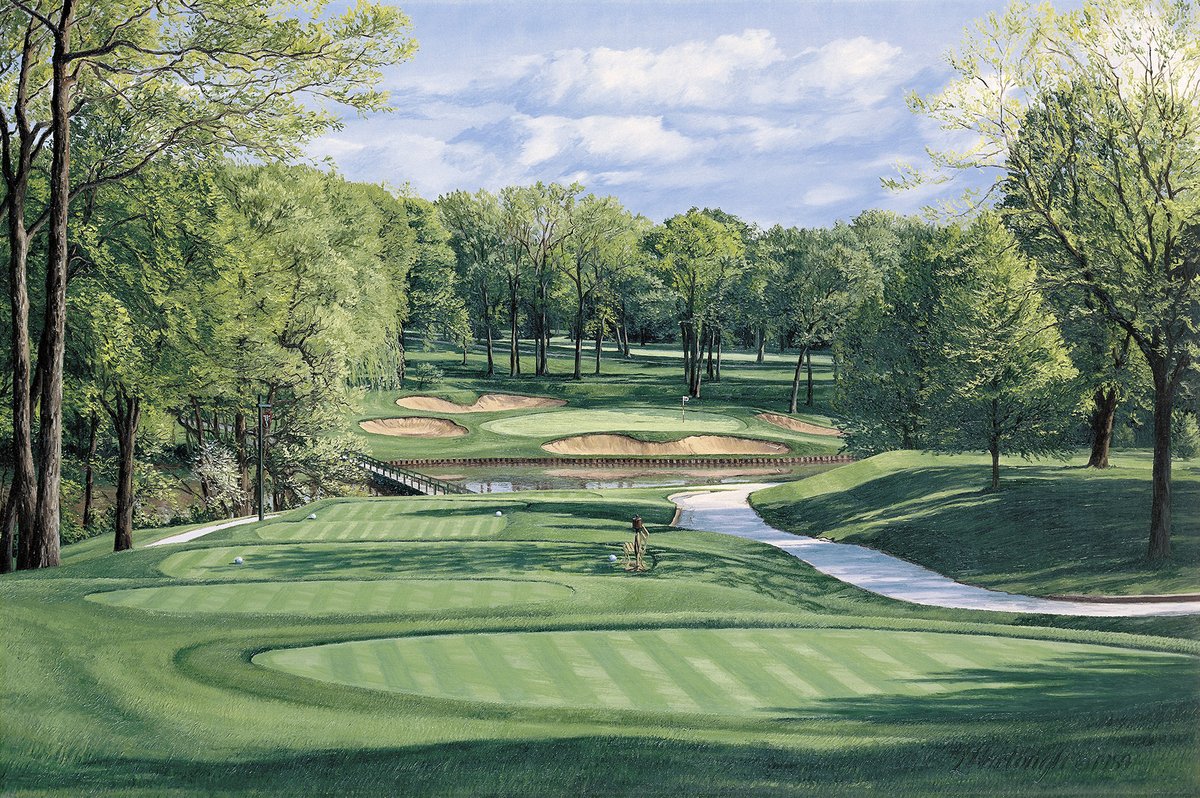
#13 Medinah Country Club, 1990 U.S. Open Championship
The 13th at Medinah's No. 3 course is its signature par-3, a long one-shotter that must carry an arm of Lake Kadijah with nothing but water and mature timber for company. Three bunkers ring a green that slopes right to left, and the wind off the lake turns club selection into the whole test. All carry, no bailout, no second chances.
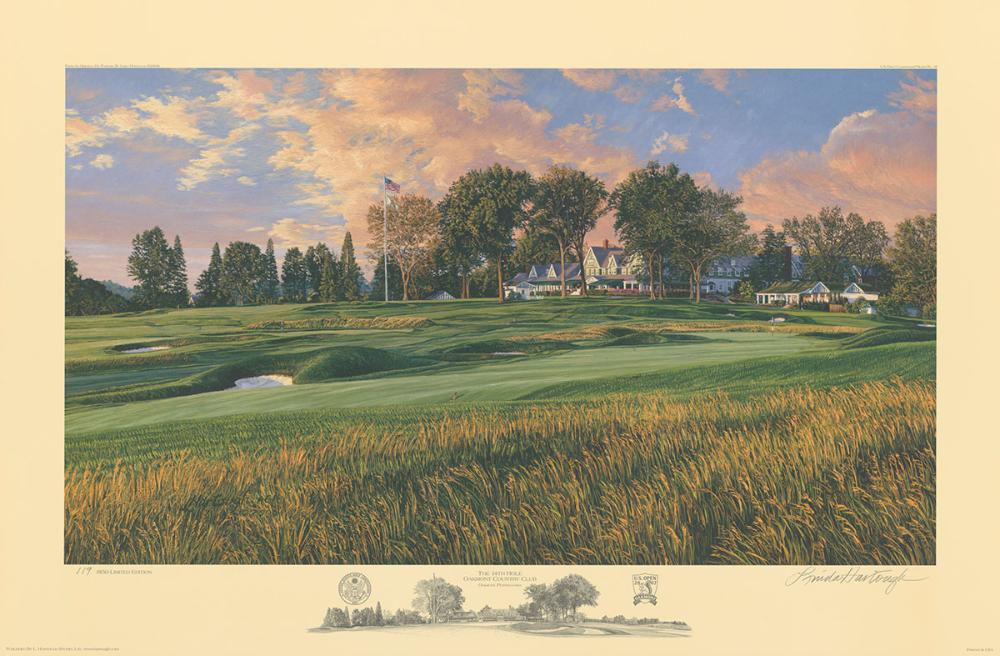
#14 Oakmont, 2007 U.S. Open Championship
This one of golf’s most intimidating par-4s, a 350-yard examination that proves distance means nothing without precision. This hole has broken the hearts of major champions and weekend warriors alike. The 14th doesn’t just test your golf swing – it tests your courage, patience, and ability to execute under the most demanding conditions imaginable.
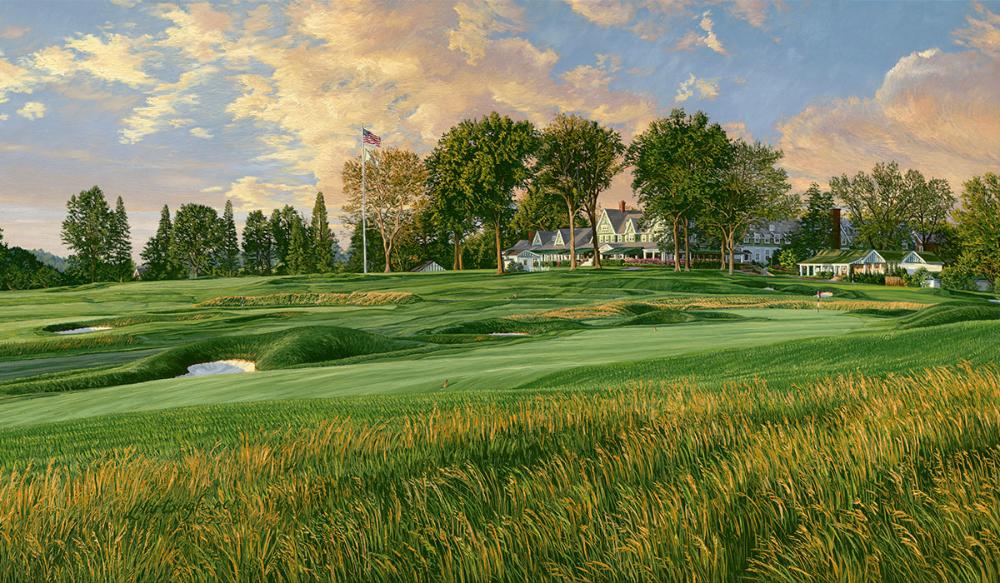
#14 Oakmont, 2007 U.S. Open Championship
The 14th at Oakmont Country Club is a par-4 that epitomizes the course’s reputation for relentless challenge. The putting surface, with its subtle yet punishing slopes, tests even the steadiest hands. As one of Oakmont’s most iconic holes, the 14th is a true examination of skill and mental fortitude, embodying the spirit of championship golf.
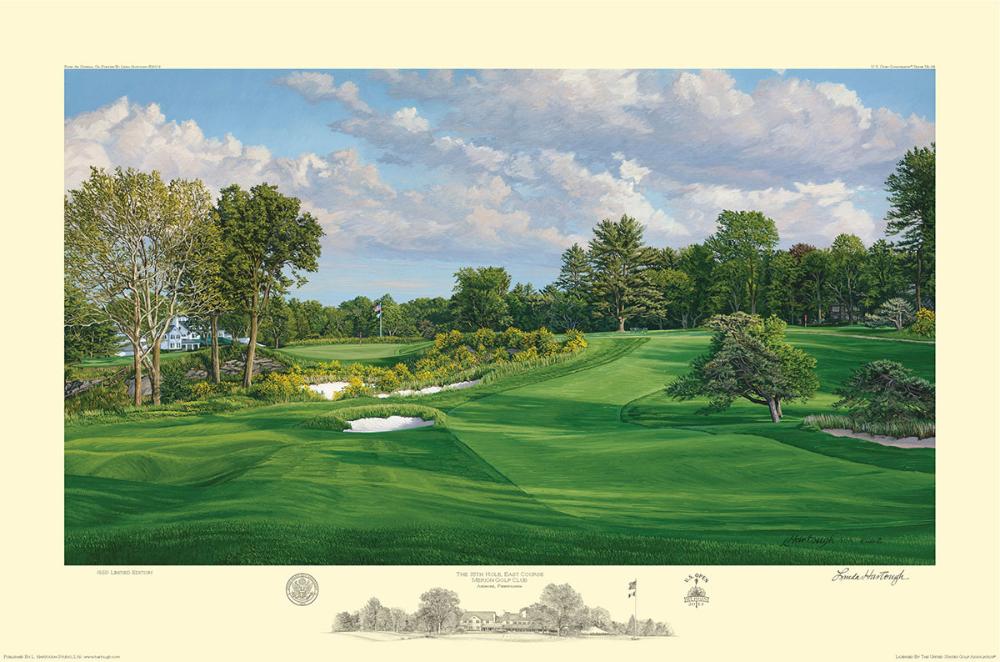
#16 Merion East Course, 2013 U.S. Open Championship
This hole stands as a masterpiece of strategic golf architecture, where every shot demands careful thought and precise execution. This par-4 dogleg left may measure just over 430 yards, but its compact design packs a championship-caliber challenge that has shaped major tournament outcomes for generation, creating moments of drama that have become part of golf’s greatest stories.
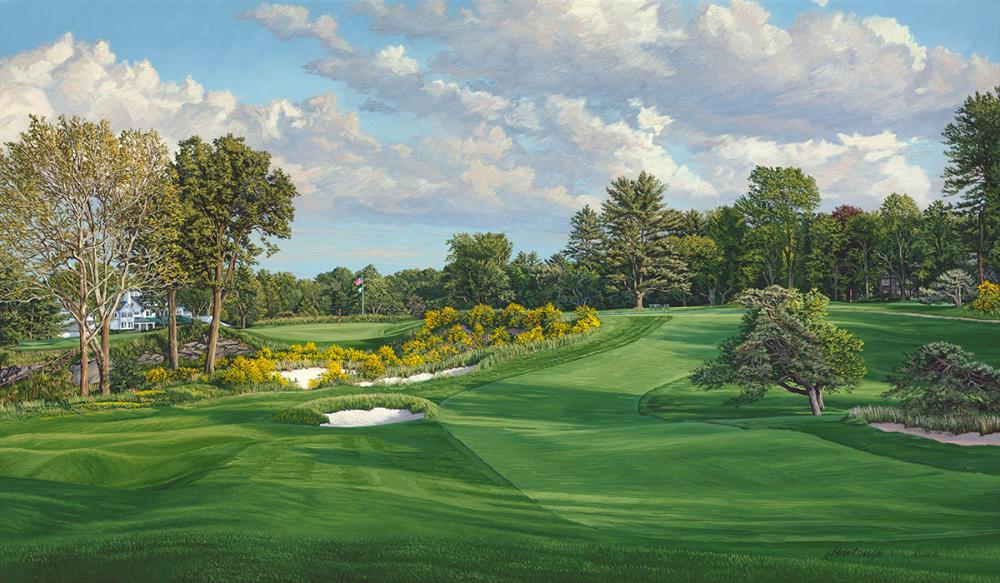
#16 Merion East Course, 2013 U.S. Open Championship
The 16th is a par-4 that perfectly encapsulates the course’s blend of beauty and challenge. With a slight dogleg left, the hole demands a precise tee shot to avoid the deep rough and strategically placed bunkers that guard the fairway. The approach shot is equally demanding, as the green is small, well-protected, and features subtle undulations that make putting a true test of skill.
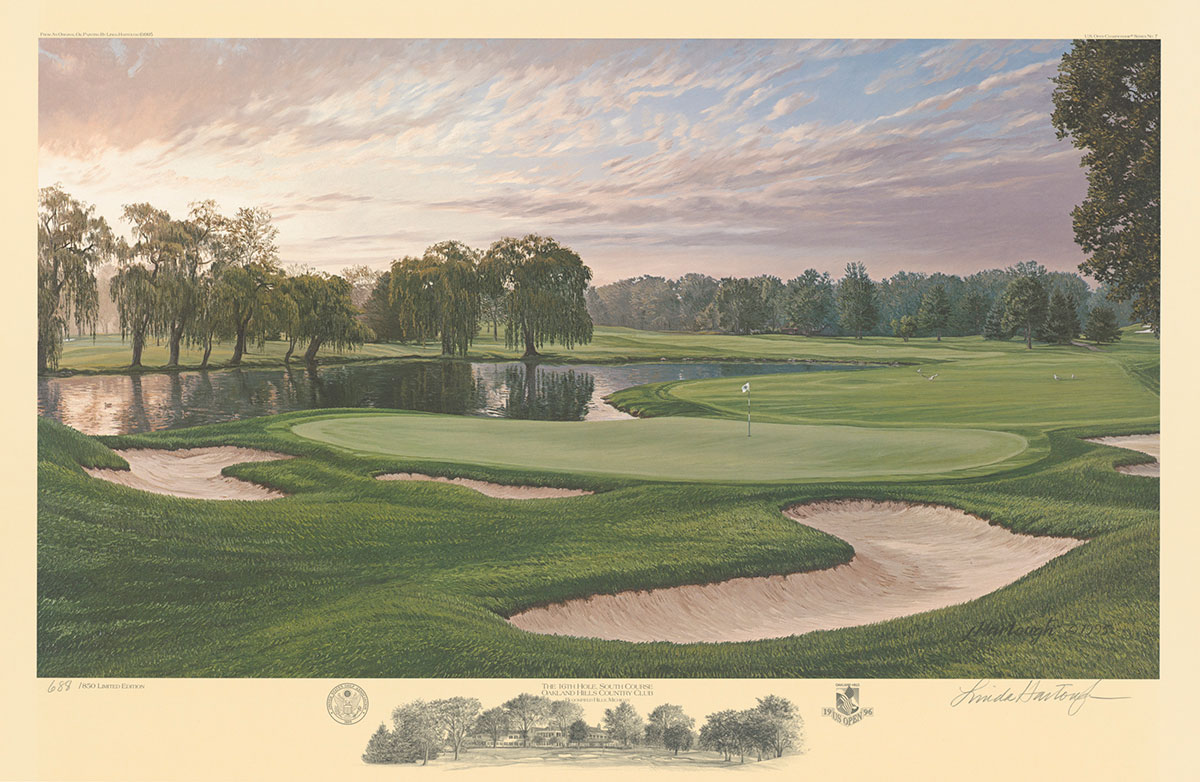
#16 Oakland Hills South Course, 1996 U.S. Open Championship
The 16th at Oakland Hills South is a demanding par-4 that epitomizes the course’s championship pedigree. Strategic fairway bunkers force precise positioning off the tee, while the elevated green is protected by deep sand and subtle slopes. The approach shot requires perfect club selection and execution, as even slight misses are severely punished. This iconic hole rewards patience and precision while testing every aspect of a golfer’s game.
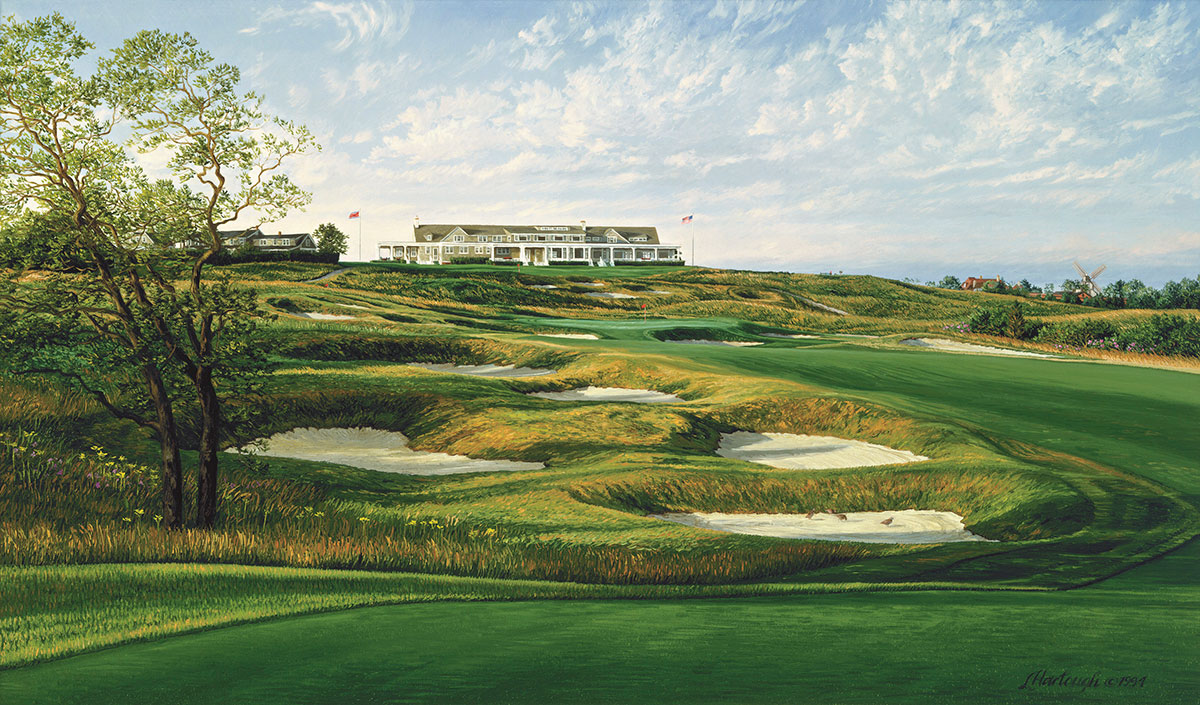
#16 Shinnecock Hills Golf Club, 1995 U.S. Open Championship
The 16th at Shinnecock Hills is a magnificent par-5 that showcases the course’s windswept beauty and strategic complexity. The drive must navigate carefully placed fairway bunkers while accounting for prevailing winds. The elevated green demands precise approach shots, with firm conditions punishing anything less than perfect. This iconic hole embodies Shinnecock’s championship character.
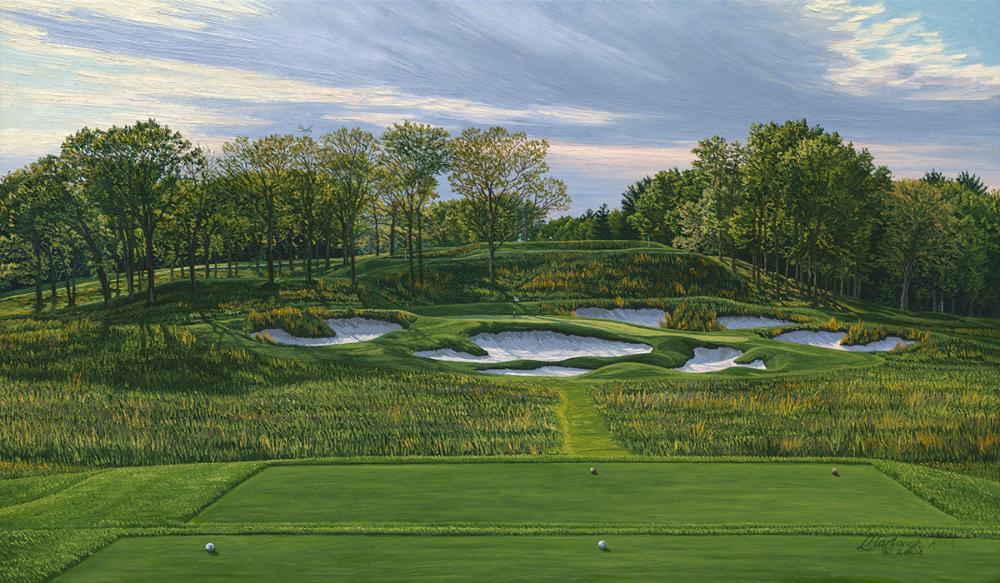
#17 Bethpage Black, 2009 U.S. Open Championship
The 17th at Bethpage Black is a par-3 that epitomizes the course’s reputation for relentless challenge. As the penultimate test on this legendary course, the 17th is a hole where champions are made – or dreams unravel.
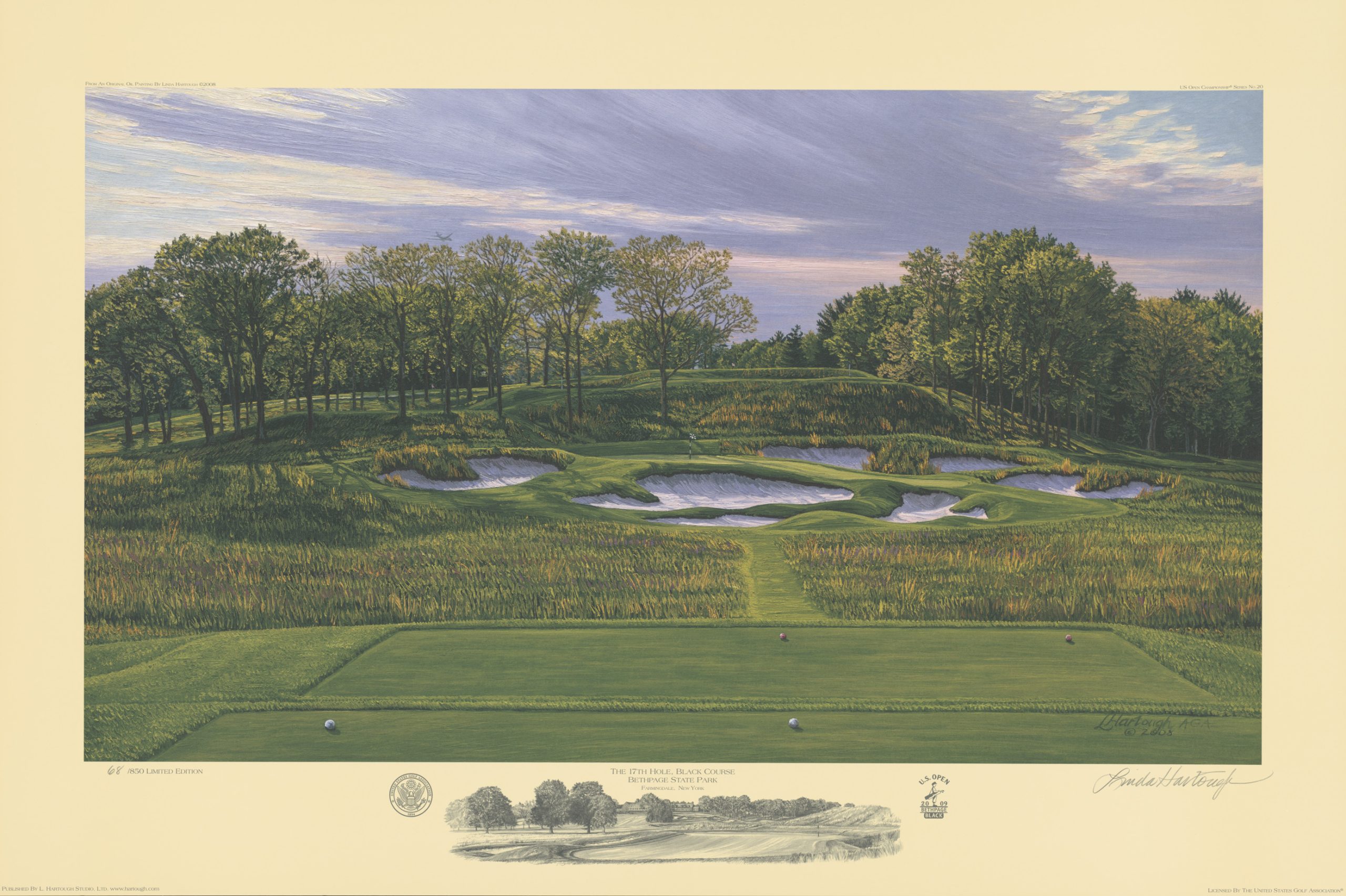
#17 Black Course, Bethpage State Park, 2009 U.S. Open Championship
The air feels heavier here, as if the course itself is testing your resolve. Standing on the tee of the 17th at Bethpage Black, you face a par-3 that is both beauty and beast. The green is perched like a fortress, daring you to challenge its defenses.
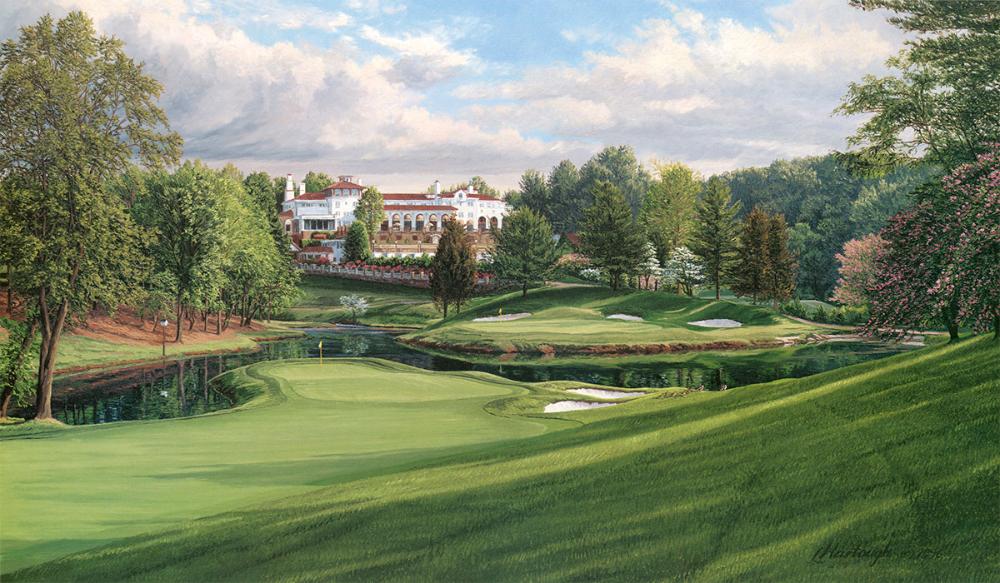
#17 Congressional Country Club Blue Course, 1997 U.S. Open Championship
The 17th at Congressional’s Blue Course is a par-4 that delivers a dramatic test of strategy and skill. The approach shot demands accuracy, as the green is guarded by water on one side and bunkers on the other, creating a risk-reward scenario that can define a round.
Looking for a particular hole?
Call the gallery and we will tell you what is available, framed or unframed.
Contact UsThe courses
Bethpage
Linda Hartough's paintings and prints of Bethpage.
Congressional
Linda Hartough's paintings and prints of Congressional.
Medinah
Linda Hartough's paintings and prints of Medinah.
Merion
Linda Hartough's paintings and prints of Merion.
Oakland Hills
Linda Hartough's paintings and prints of Oakland Hills.
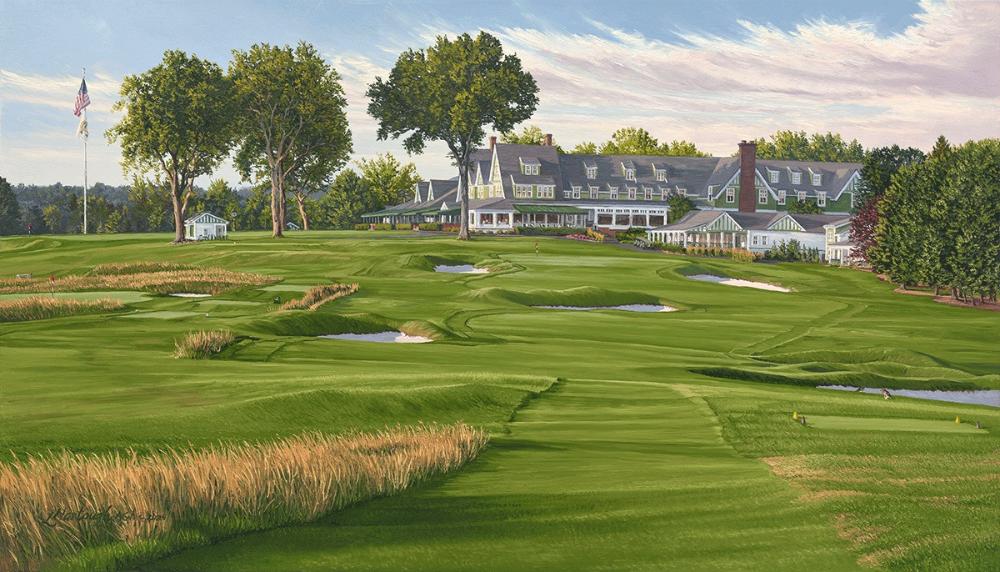
Oakmont
Linda Hartough's paintings and prints of Oakmont.
Olympia Fields
Linda Hartough's paintings and prints of Olympia Fields.
Olympic Club
Linda Hartough's paintings and prints of Olympic Club.
Tournaments
Where they are
California & the Monterey Peninsula
Courses of California & the Monterey Peninsula.
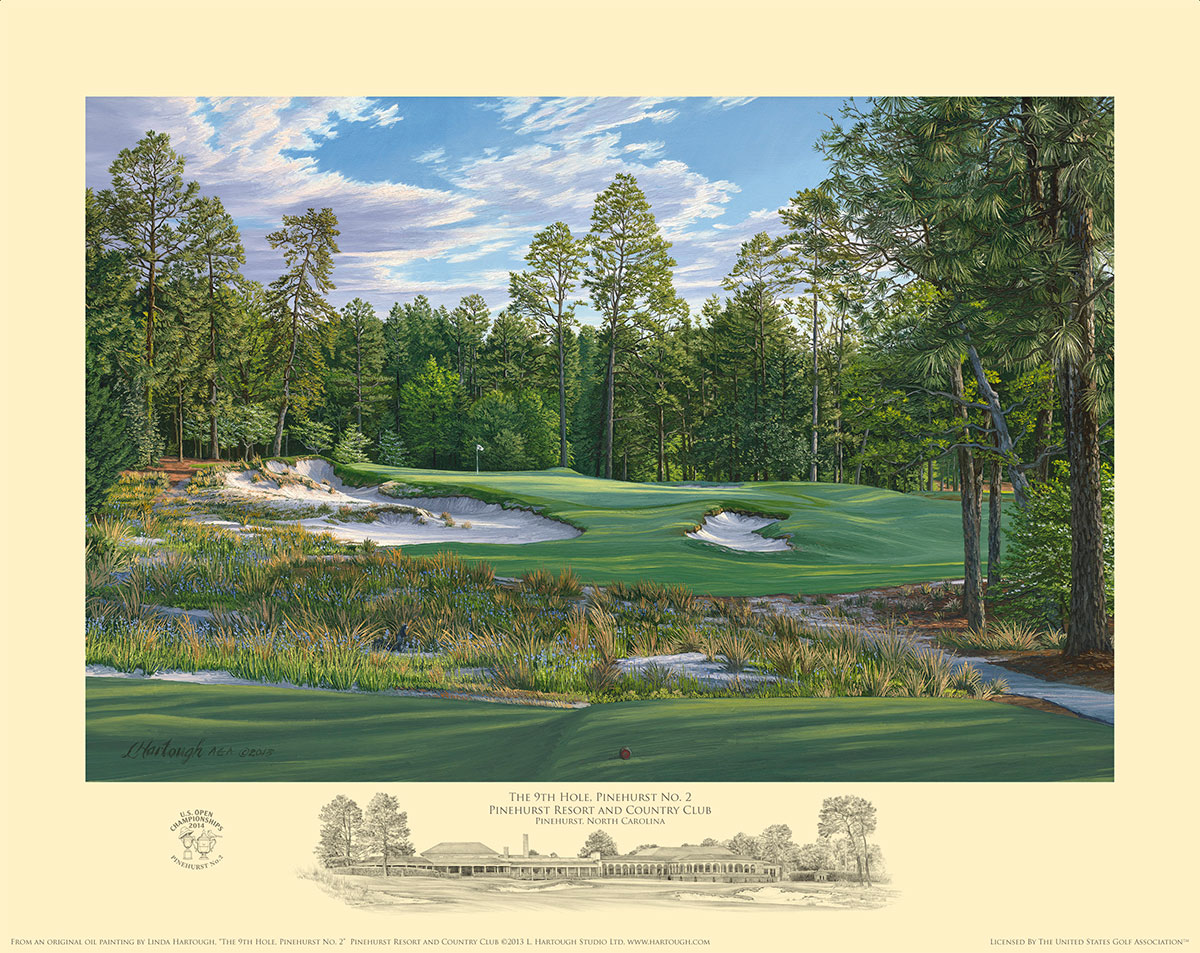
The Carolina Sandhills
Courses of the Carolina Sandhills.
New York & Long Island
Courses of New York & Long Island.
Philadelphia & Western Pennsylvania
Courses of Philadelphia & Western Pennsylvania.
The Midwest & Mid-Atlantic
Courses of the Midwest & Mid-Atlantic.
More tournaments
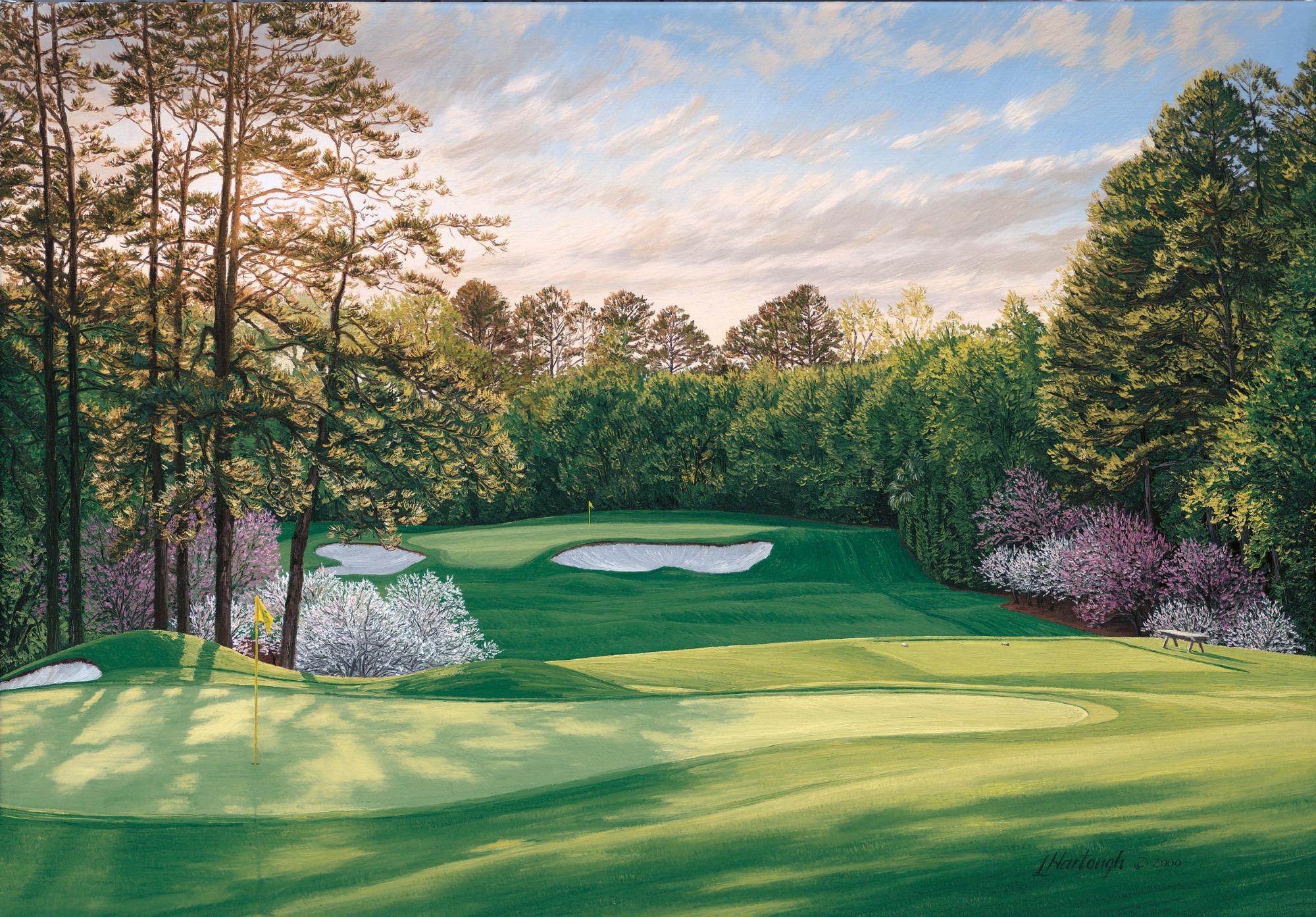
The Masters
Augusta National, the one major played on the same course every April.
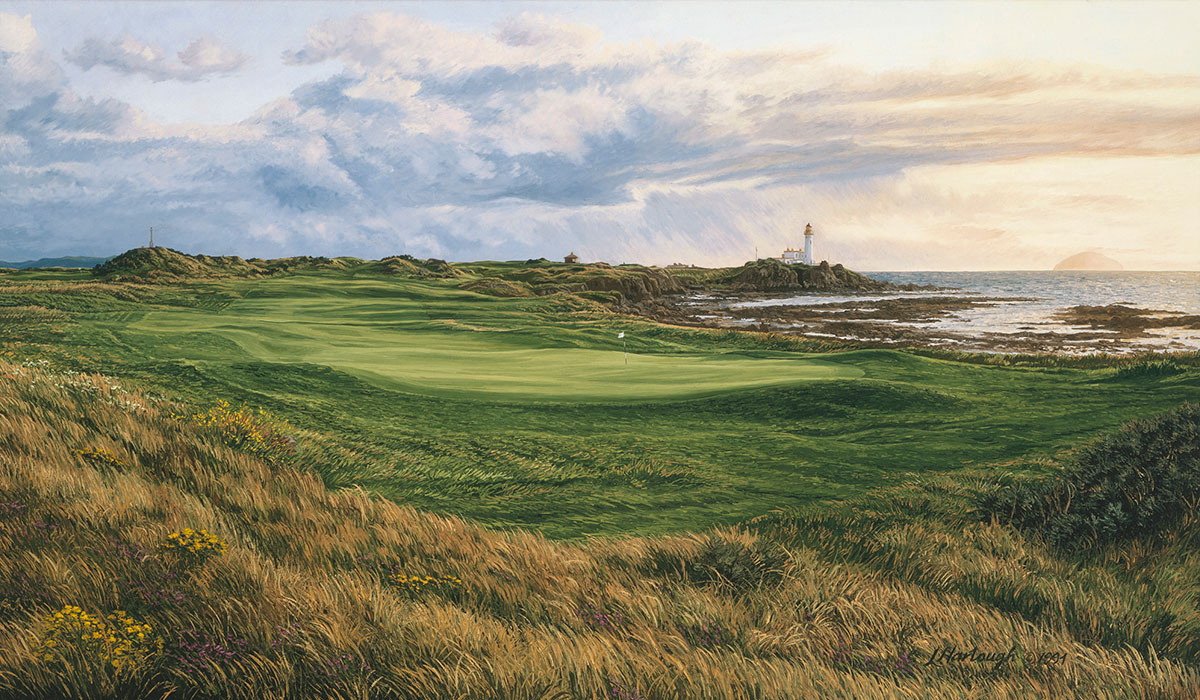
The Open Championship
The links of Scotland and England that host golf's oldest major.
The Ryder Cup
Work tied to the Ryder Cup matches.
The PGA Championship
The PGA of America's championship, played since 1916 on many of the country's finest courses.
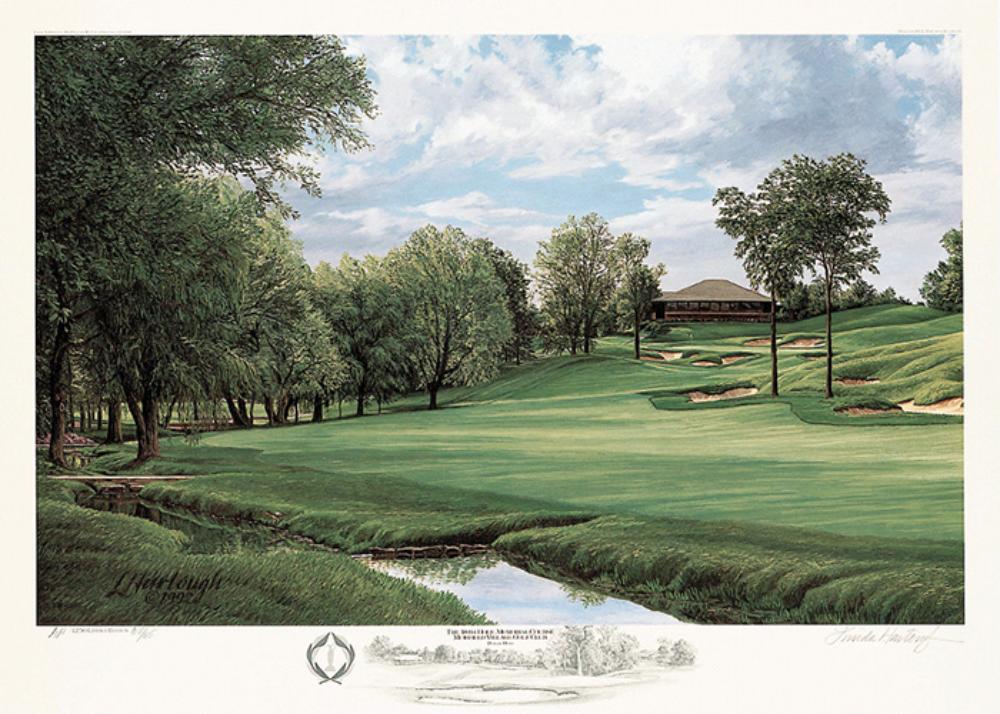
The Presidents Cup
The United States against an International team, with Medinah hosting in 2026.
The U.S. Women's Open
Courses Linda painted that have also hosted the U.S. Women's Open.
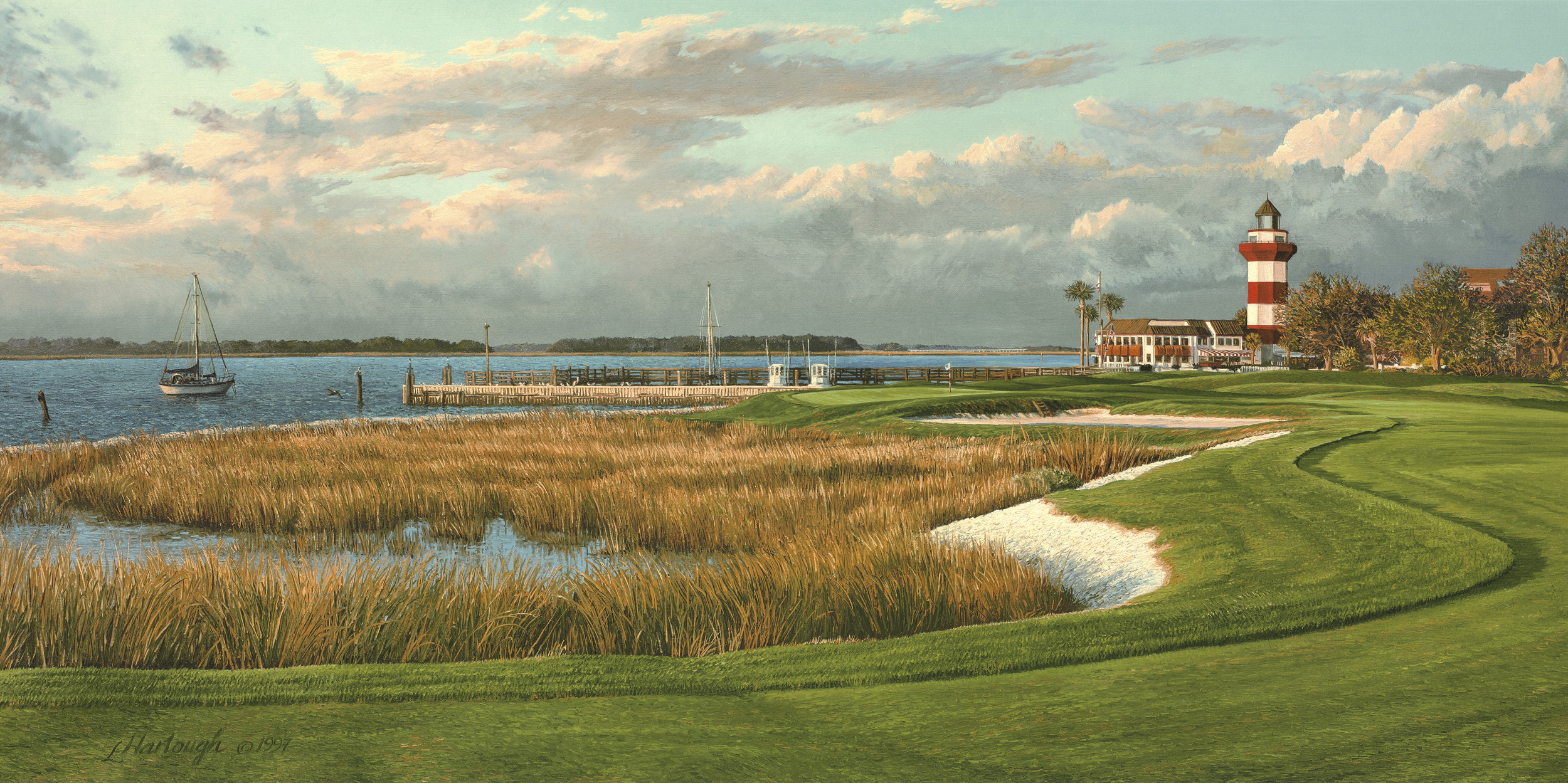
RBC Heritage
Harbour Town Golf Links, home of the Heritage on Hilton Head Island.