
New York & Long Island: Golf Paintings and Prints
Tillinghast's courses in Westchester and the windswept hills of eastern Long Island.
The New York area was one of the first centers of American golf, and it holds an unusual concentration of championship courses built between the 1890s and the 1930s. Two landscapes shape them.
North of the city, in Westchester County, the ground is rolling and rocky, with hardwood forest and streams. A.W. Tillinghast, among the leading architects of the 1920s, did some of his best work here. At Winged Foot in Mamaroneck, which opened in 1923, the West Course relies on deep bunkers and heavily contoured greens rather than water, and it has hosted six U.S. Opens. Next door, Quaker Ridge, another Tillinghast design, is a quieter course, known for doglegs and angles, which has hosted the Walker Cup and Curtis Cup.
Long Island is flatter and sandier, a glacial landscape of outwash plains and hills. At Bethpage State Park in Farmingdale, the Black Course, opened in 1936 and credited to Tillinghast, has hosted two U.S. Opens, a PGA Championship and the 2025 Ryder Cup while remaining open to the public. At the island's eastern end, near Southampton, Shinnecock Hills occupies rolling, largely treeless hills covered in fescue and native grasses. The club was one of the founders of the USGA in 1894, and its course, with constant wind off the ocean and Peconic Bay, looks closer to a British links than almost anything else in American championship golf. It has hosted six U.S. Opens.
Between them, these courses show the range of golf in the region: tight parkland greens in Westchester and open, wind-exposed ground on Long Island. Linda Hartough's New York paintings mark several U.S. Opens, including Bethpage in 2002 and 2009, Shinnecock in 1995 and 2004, and Winged Foot in 2006.
The prints
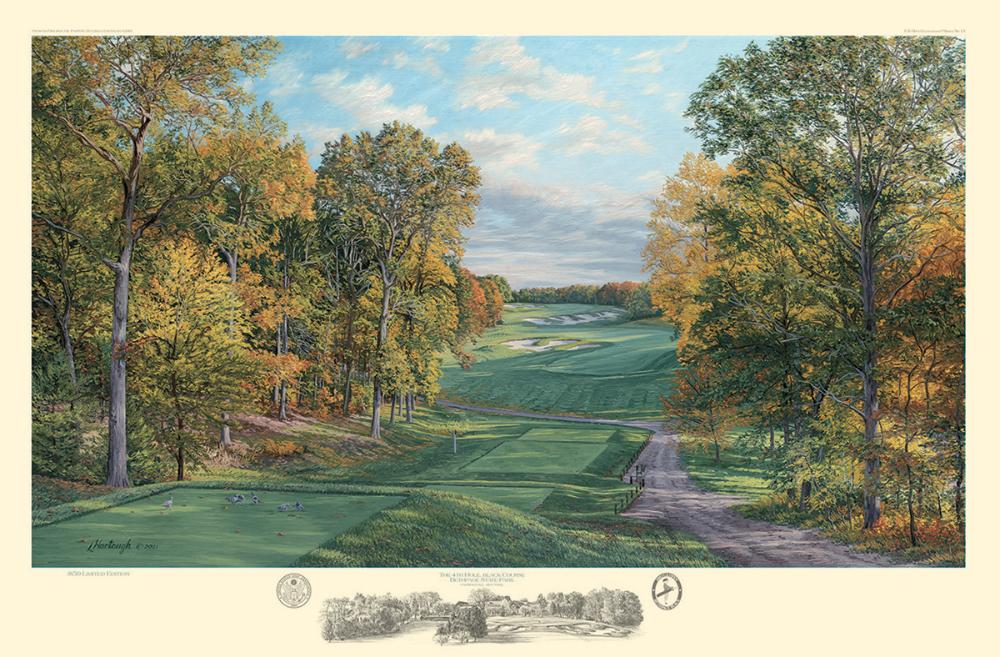
#4 Bethpage Black, 2002 U.S. Open Championship
The 4th hole at Bethpage Black stands as one of the most feared par-5s in championship golf, a 515-yard examination that separates pretenders from contenders. This iconic hole has humbled professionals and amateurs alike.
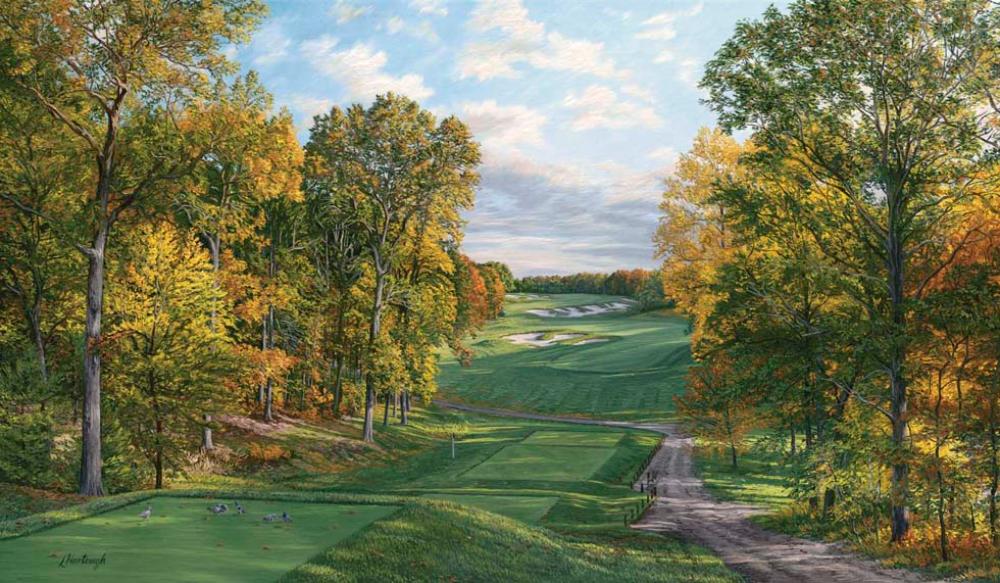
#4 Bethpage Black, 2002 U.S. Open Championship
This par-5 monster showcases everything intimidating about this legendary course. Stretching over 500 yards, this brute demands both power and precision from start to finish. This hole embodies Bethpage Black’s unforgiving nature.
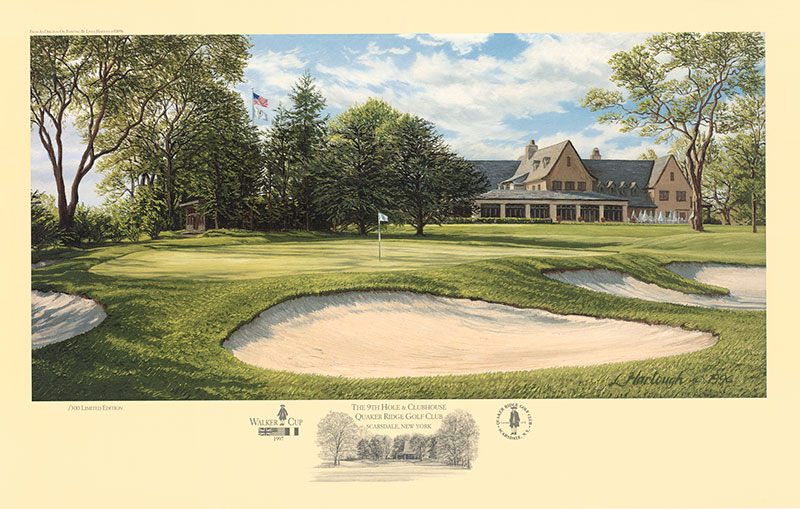
#9 and Clubhouse Quaker Ridge Golf Club
The 9th at Quaker Ridge is a masterful par-4 that demands both strategic thinking and precise execution. The drive must navigate well-positioned fairway bunkers to find the optimal angle for the approach shot. The elevated green, guarded by deep sand and subtle slopes, punishes anything less than perfect distance control. This expertly designed hole showcases Quaker Ridge’s reputation for classic architecture.
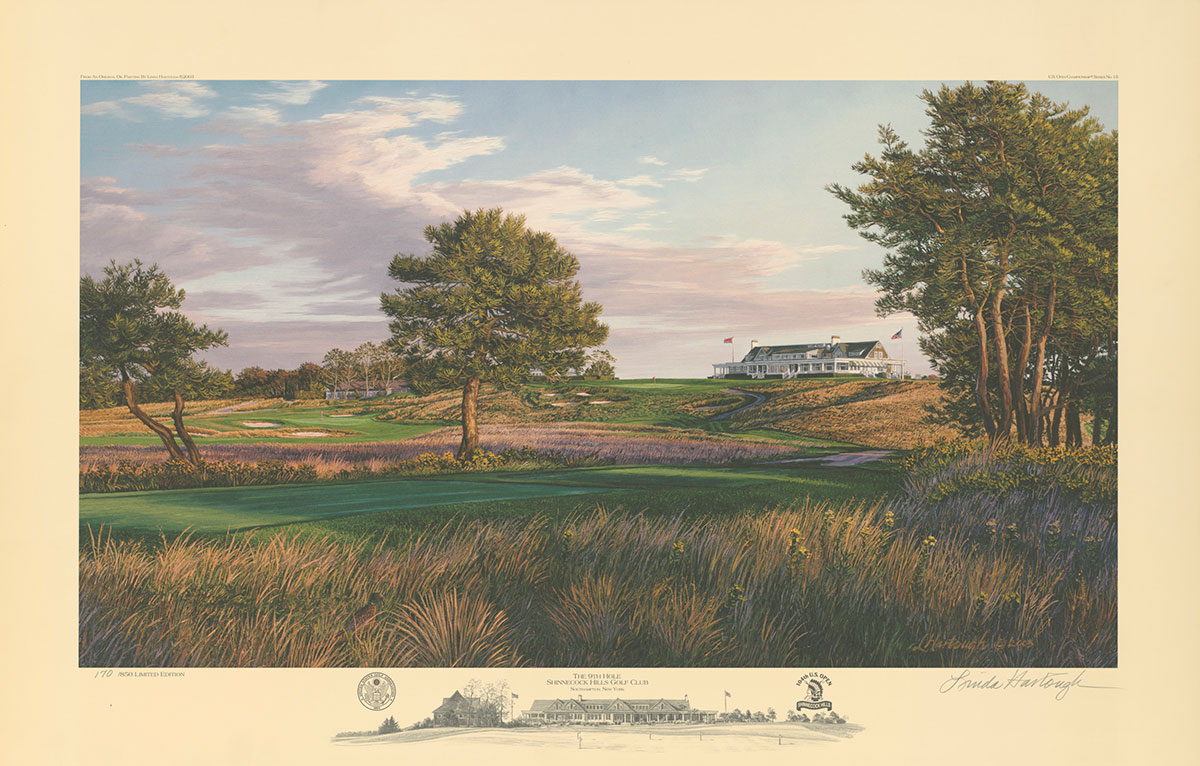
#9 Shinnecock Hills Golf Club, 2004 U.S. Open Championship
The 9th at Shinnecock Hills is a visually striking par-4 that showcases the course’s natural beauty while testing every aspect of your game. The tee shot must find the narrow fairway amid rolling fescue and strategically placed bunkers. From there, the approach demands pinpoint accuracy to a firm, elevated green that sheds imprecise shots. Wind adds complexity to club selection, making this hole a true championship test.
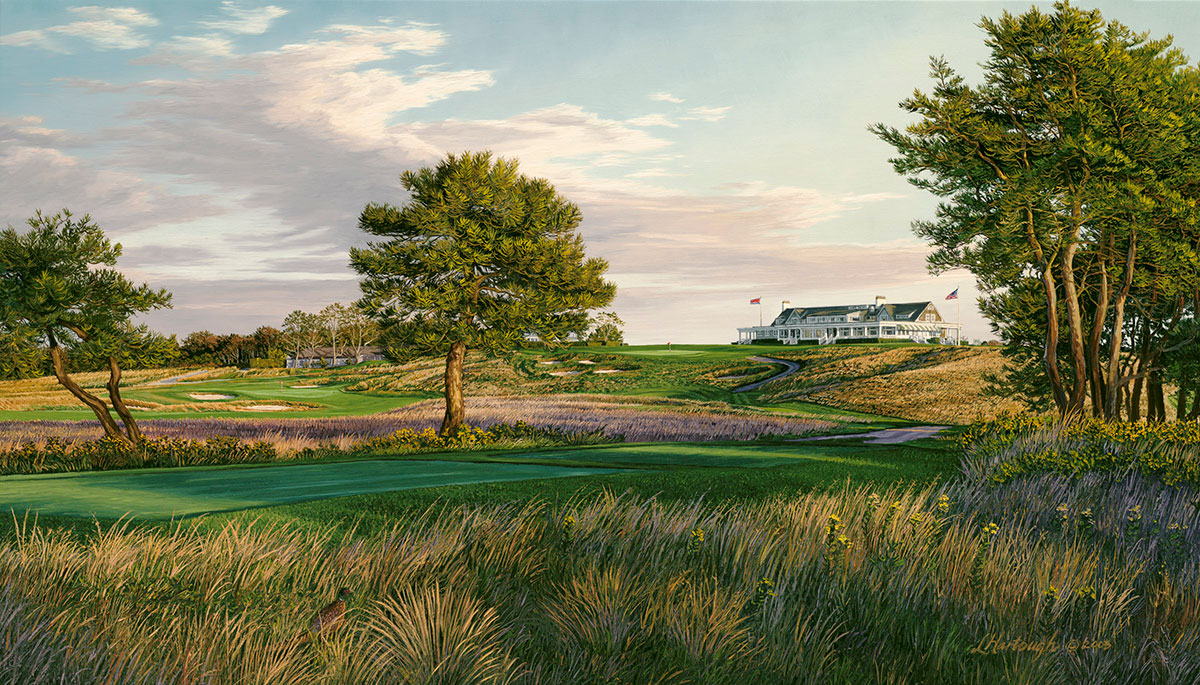
#9 Shinnecock Hills Golf Club, 2004 U.S. Open Championship
The 9th at Shinnecock Hills is a demanding par-4 where strategic positioning off the tee sets up everything that follows. Fairway bunkers and native grasses punish wayward drives, while the approach to the elevated green requires precise distance control. The putting surface’s subtle undulations challenge even perfect approach shots. This iconic hole embodies Shinnecock’s windswept character and unforgiving nature.
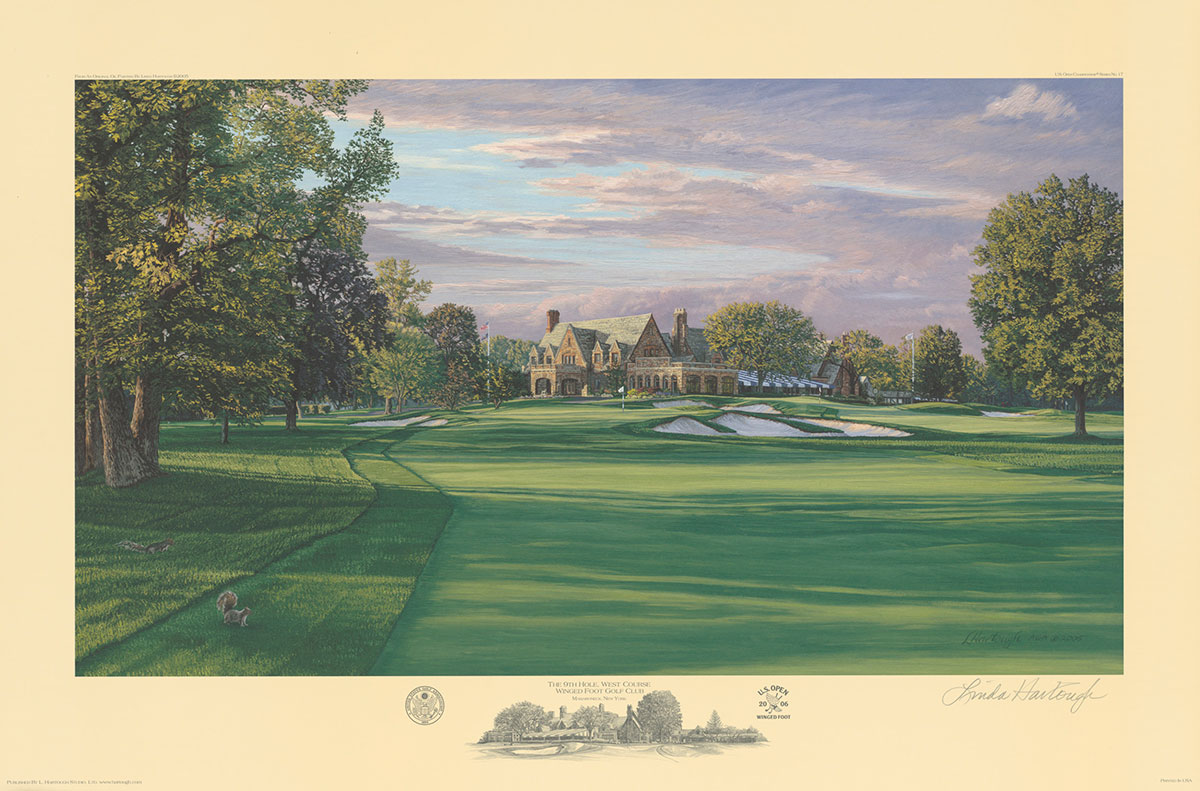
#9 Winged Foot, 2006 U.S. Open Championship
The 9th at Winged Foot is a visually imposing par-4 where every shot demands surgical precision. The drive must thread between strategically placed bunkers to find the narrow fairway corridor. From there, the approach to the fortress-like green requires perfect club selection and flawless execution, as deep sand guards all angles. Rolling putting surfaces punish even slight misreads. This masterpiece showcases Winged Foot’s uncompromising design philosophy.
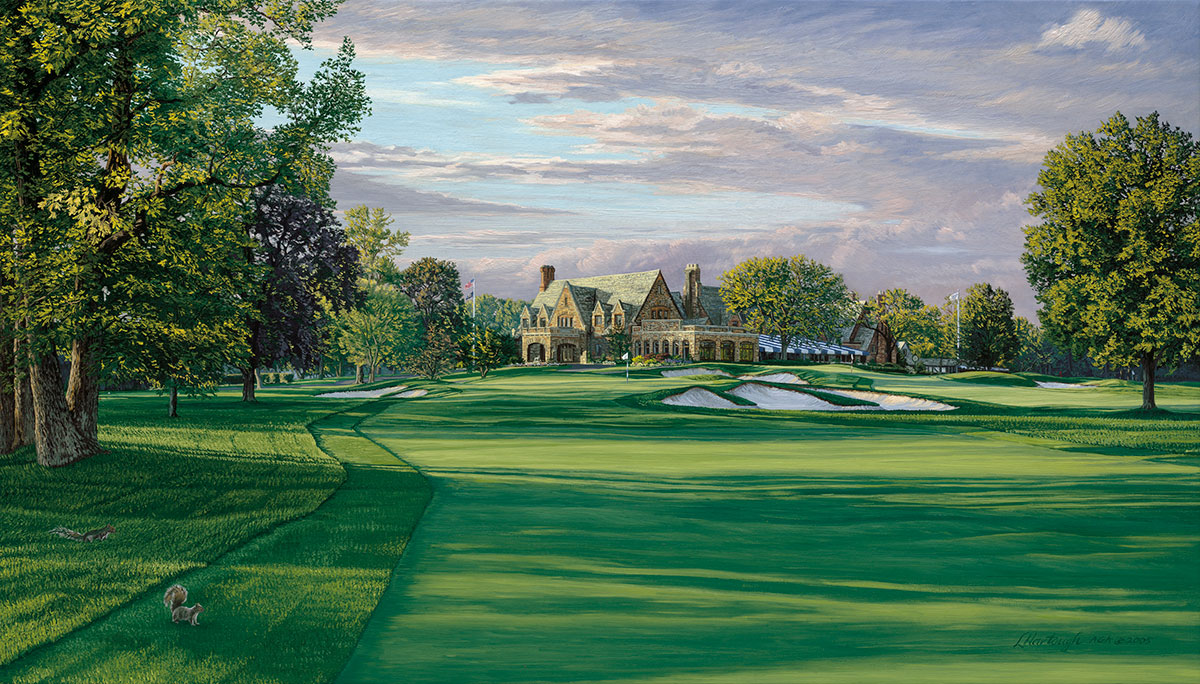
#9 Winged Foot, 2006 U.S. Open Championship
The 9th at Winged Foot is a punishing par-4 that epitomizes the course’s demanding character. Strategic positioning off the tee is crucial to avoid deep fairway bunkers and set up the proper approach angle. The elevated green is heavily defended by sand and requires precise distance control on firm surfaces. Even perfect approach shots face treacherous putting on subtle slopes. This iconic hole rewards only flawless execution.
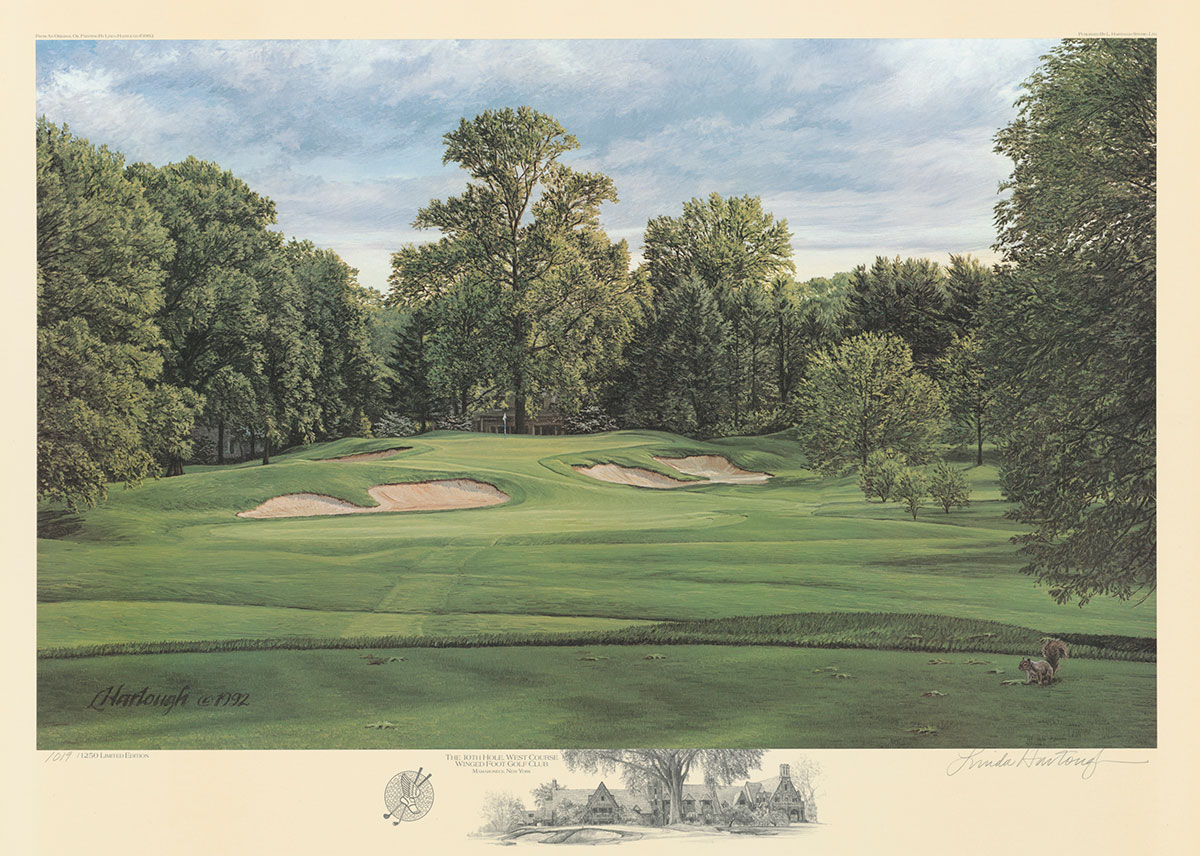
#10 Winged Foot West Course
The 10th at Winged Foot West is a formidable par-3 stretching over 190 yards to a well-guarded green. Deep bunkers surround every approach angle, demanding precise club selection and flawless execution. The green’s subtle slopes and tiers punish anything less than perfect, making par a true achievement. This hole epitomizes Winged Foot’s unforgiving nature.
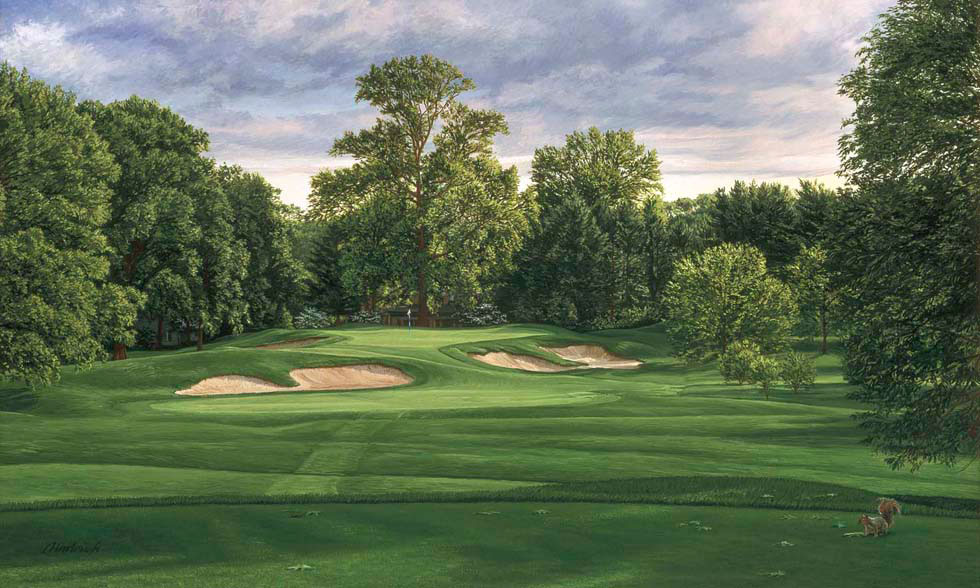
#10 Winged Foot West Course
The 10th at Winged Foot West is a par-3 that demands precision and nerve. Playing over 190 yards, the green is well-protected by deep bunkers and subtle slopes that challenge even the best. The putting surface’s undulations require a deft touch, making par a hard-earned reward. This hole exemplifies the course’s reputation for testing every aspect of a golfer’s game. The 18″x30″ Canvas Giclée is on sale for 50% off.
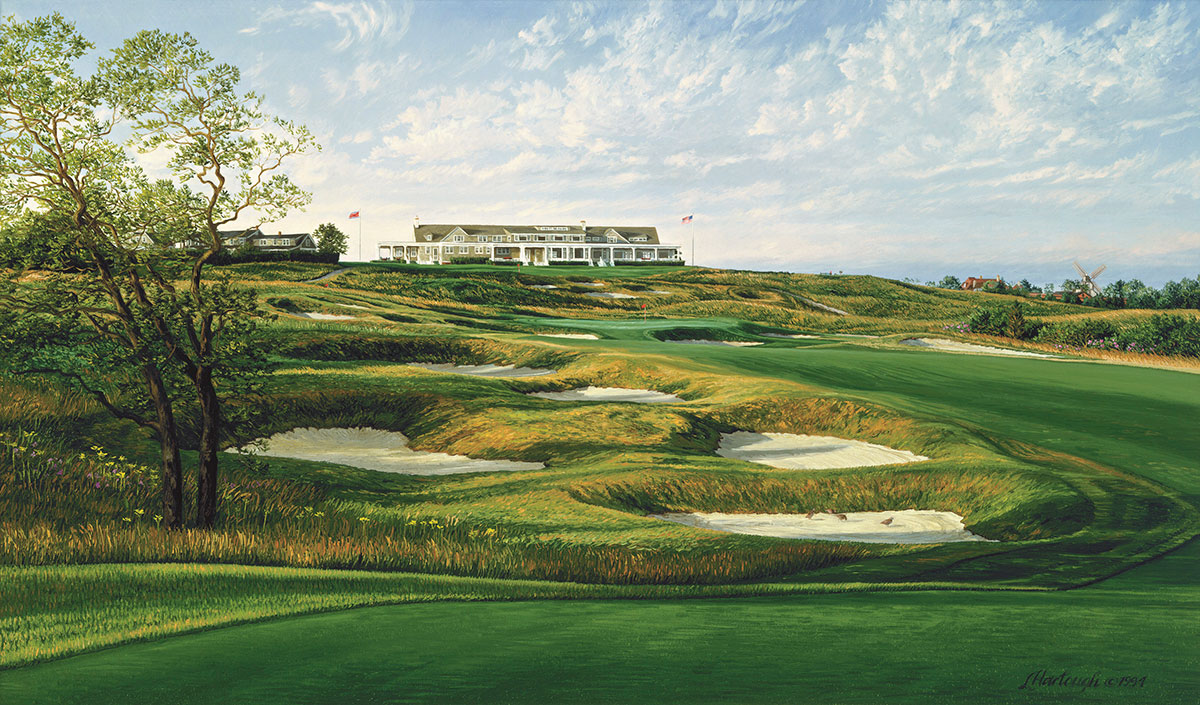
#16 Shinnecock Hills Golf Club, 1995 U.S. Open Championship
The 16th at Shinnecock Hills is a magnificent par-5 that showcases the course’s windswept beauty and strategic complexity. The drive must navigate carefully placed fairway bunkers while accounting for prevailing winds. The elevated green demands precise approach shots, with firm conditions punishing anything less than perfect. This iconic hole embodies Shinnecock’s championship character.
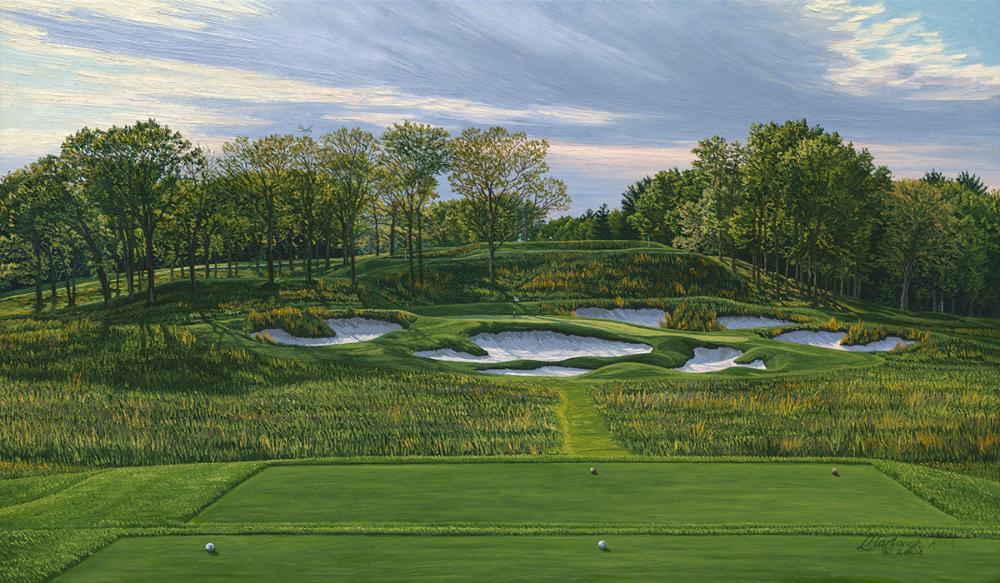
#17 Bethpage Black, 2009 U.S. Open Championship
The 17th at Bethpage Black is a par-3 that epitomizes the course’s reputation for relentless challenge. As the penultimate test on this legendary course, the 17th is a hole where champions are made – or dreams unravel.
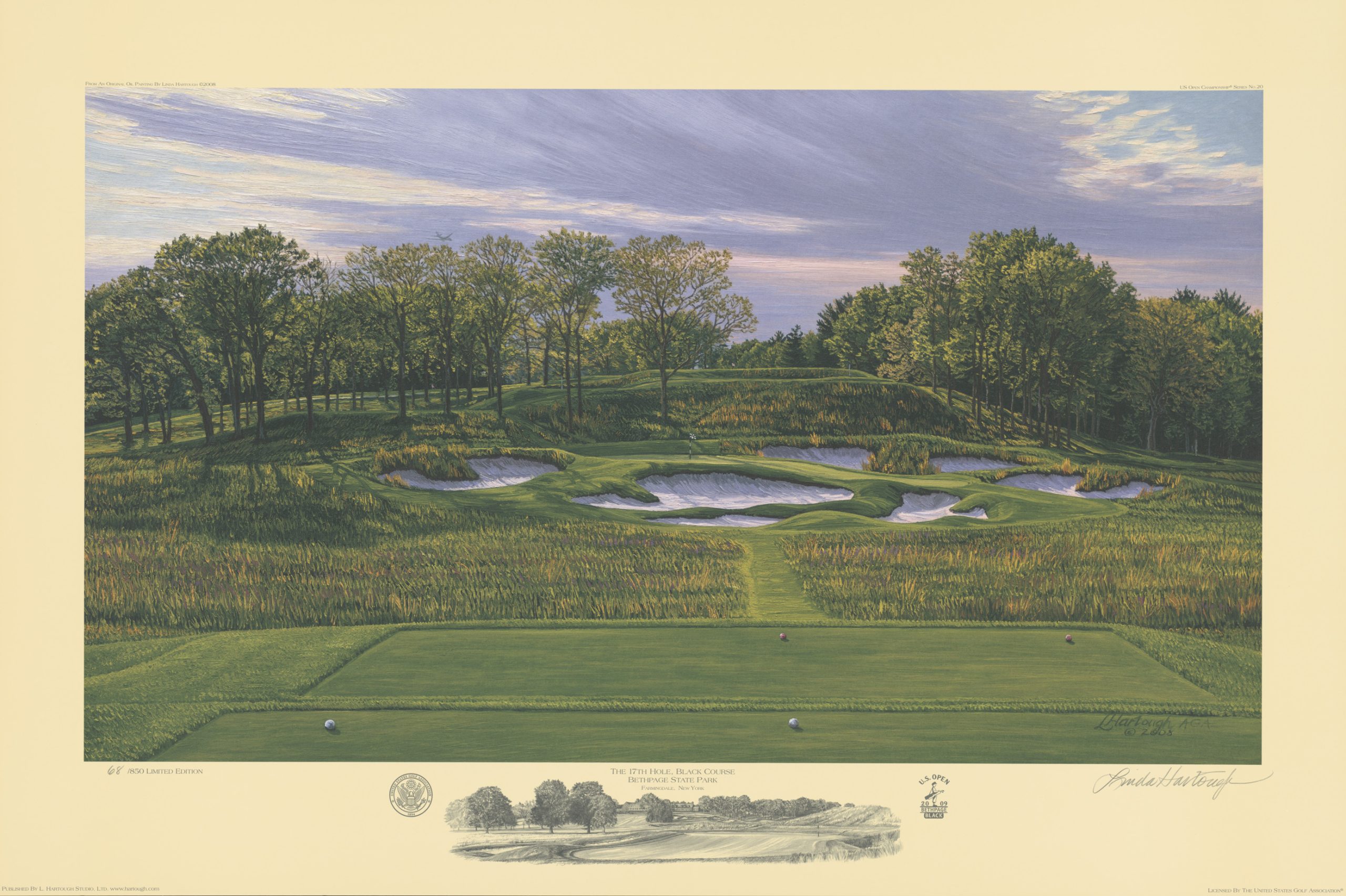
#17 Black Course, Bethpage State Park, 2009 U.S. Open Championship
The air feels heavier here, as if the course itself is testing your resolve. Standing on the tee of the 17th at Bethpage Black, you face a par-3 that is both beauty and beast. The green is perched like a fortress, daring you to challenge its defenses.
Looking for a particular hole?
Call the gallery and we will tell you what is available, framed or unframed.
Contact UsThe courses
Tournaments
More countries & regions
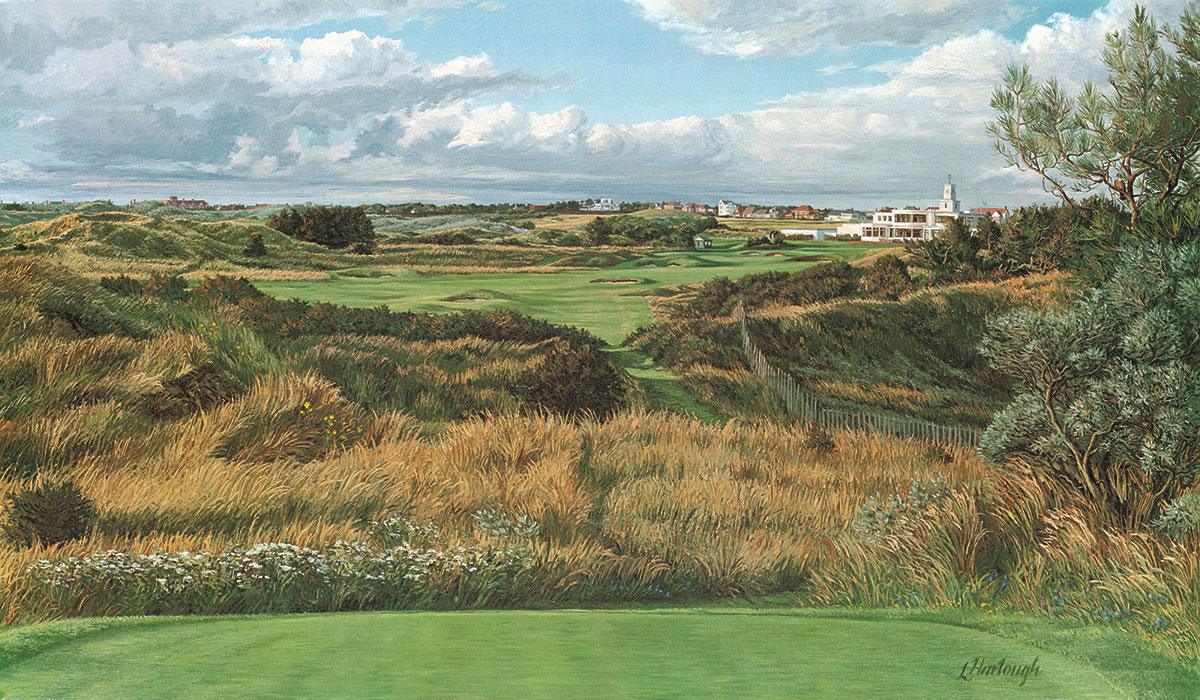
England
The courses of England, as Linda Hartough painted them.
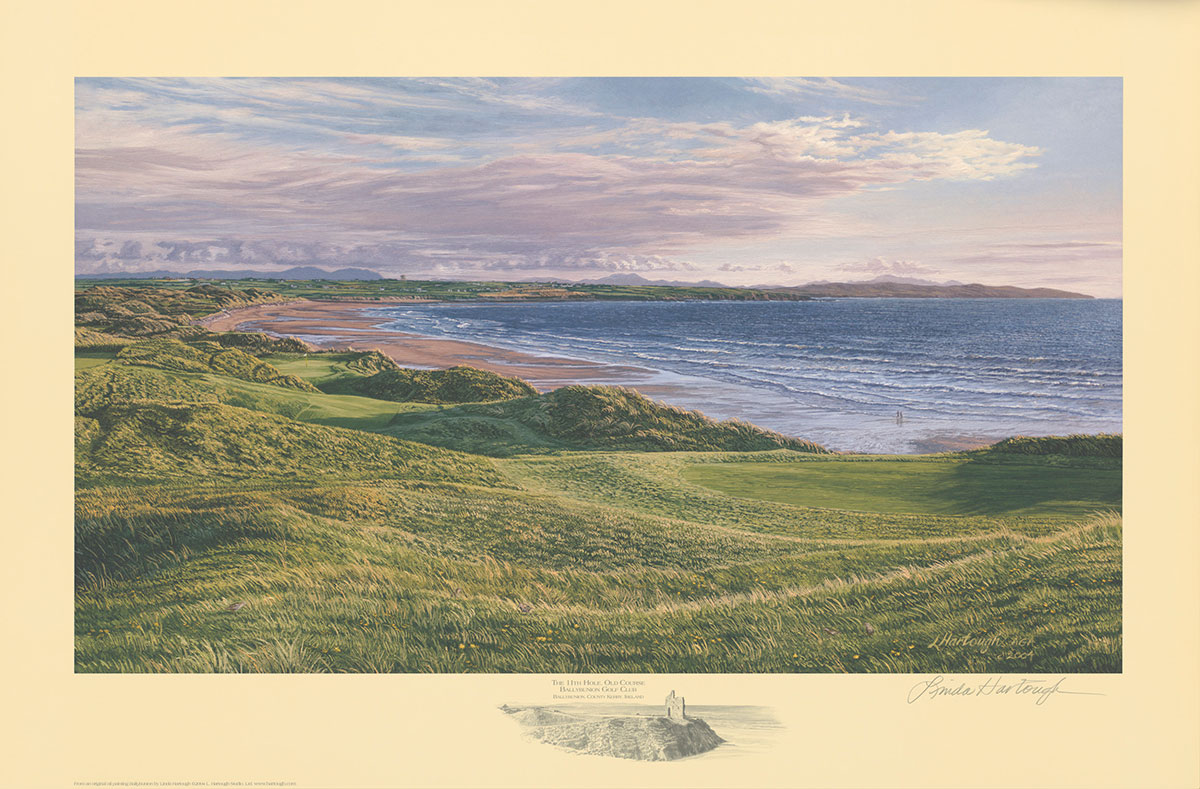
Ireland
The courses of Ireland, as Linda Hartough painted them.
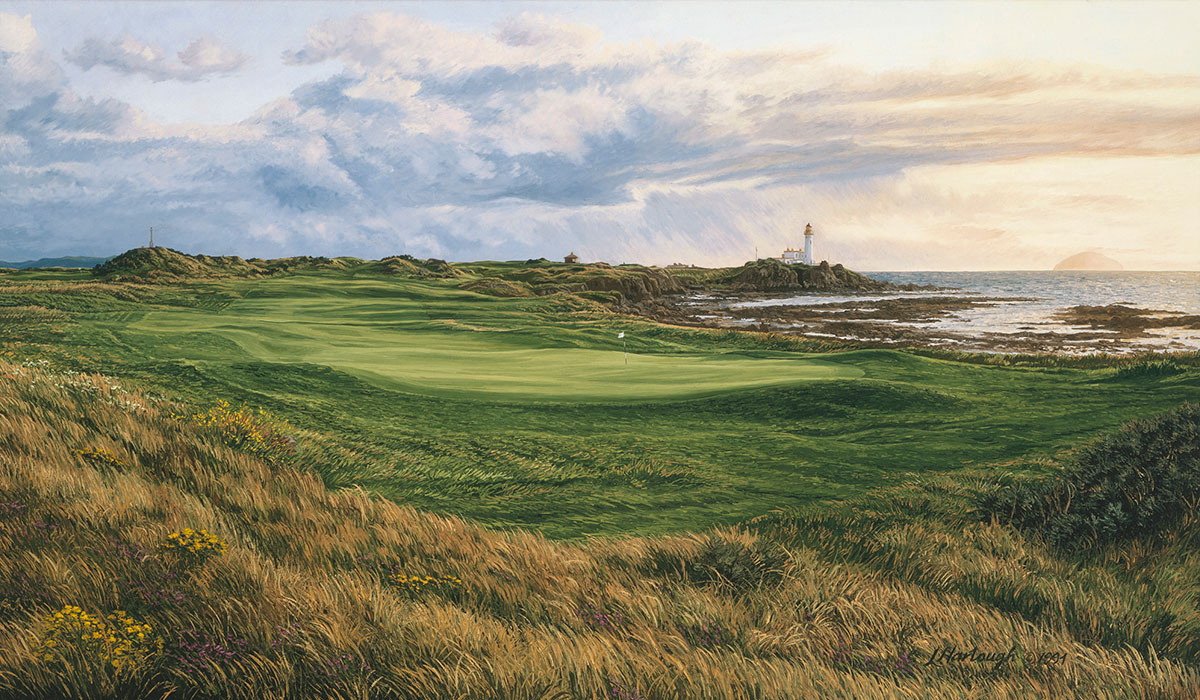
Scotland
The courses of Scotland, as Linda Hartough painted them.
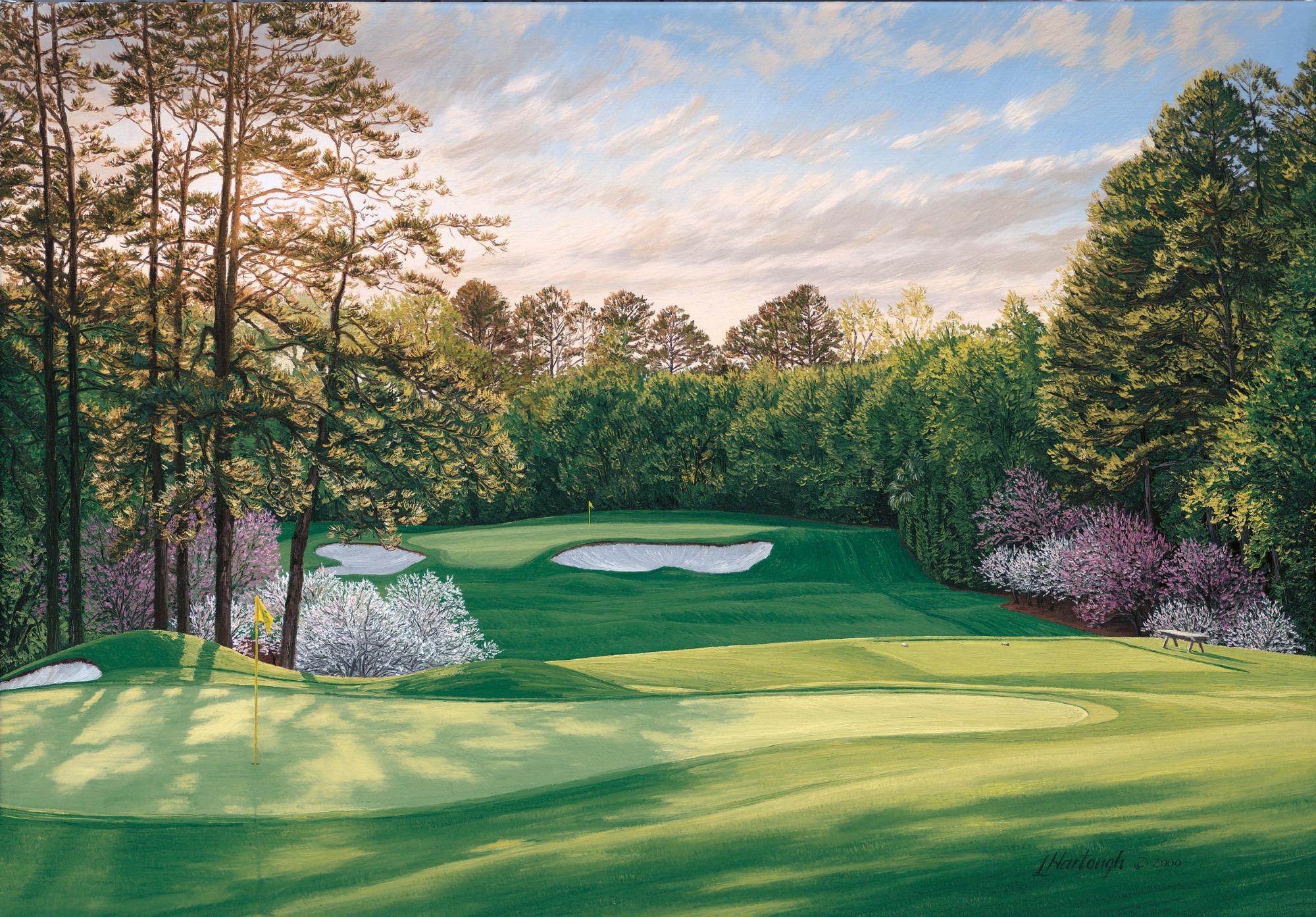
Georgia & the Carolina Lowcountry
Courses of Georgia & the Carolina Lowcountry.
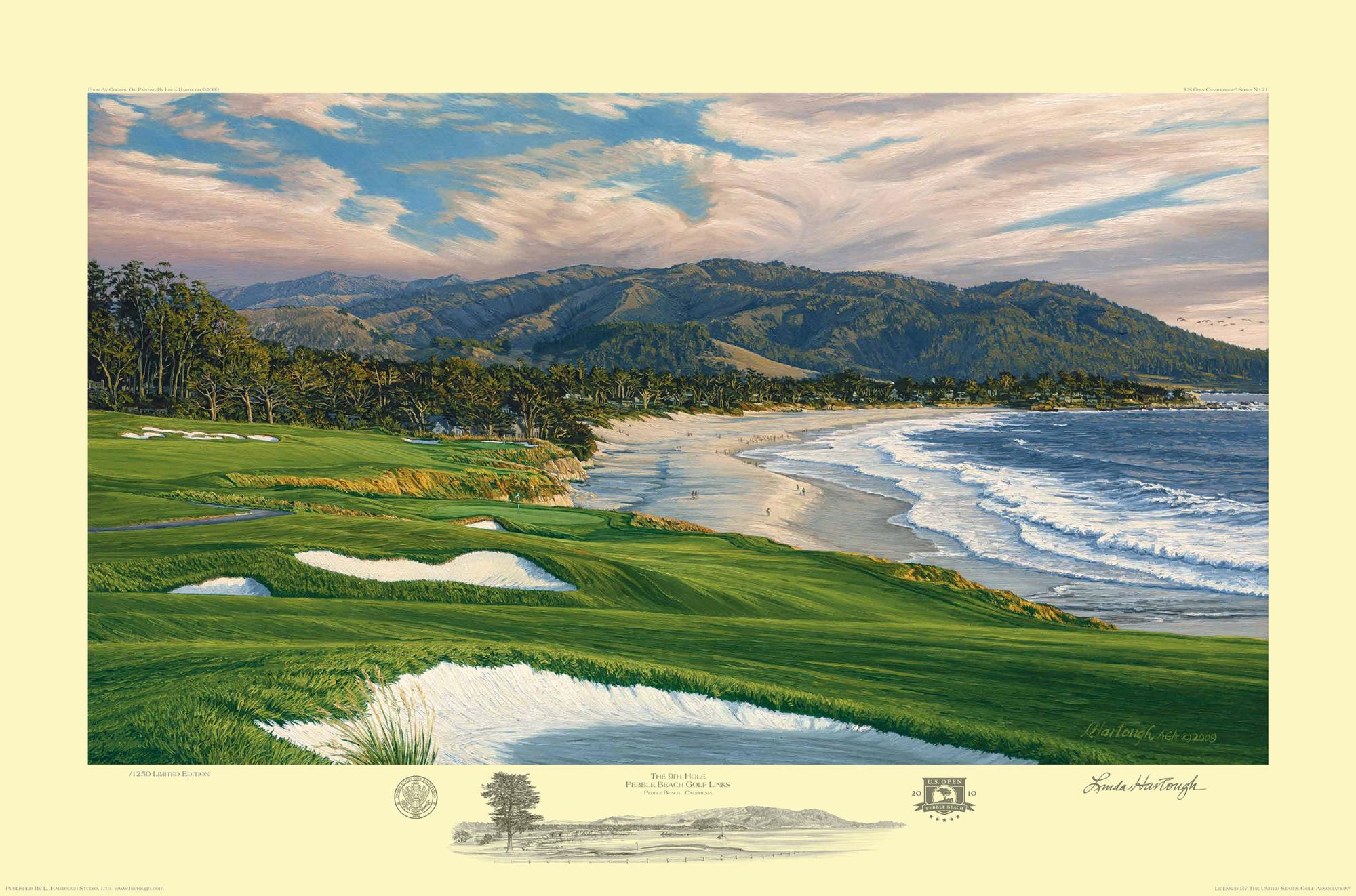
California & the Monterey Peninsula
Courses of California & the Monterey Peninsula.
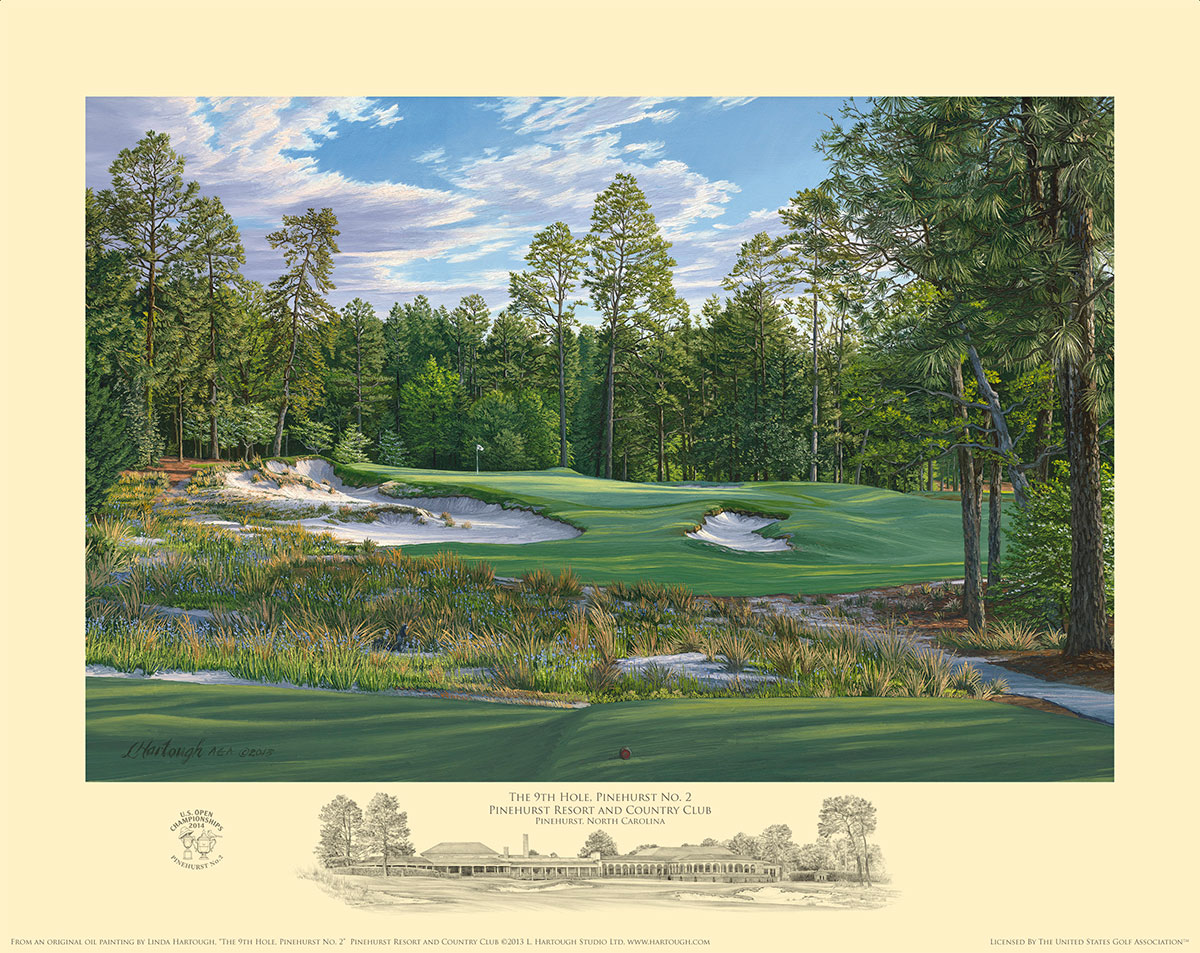
The Carolina Sandhills
Courses of the Carolina Sandhills.
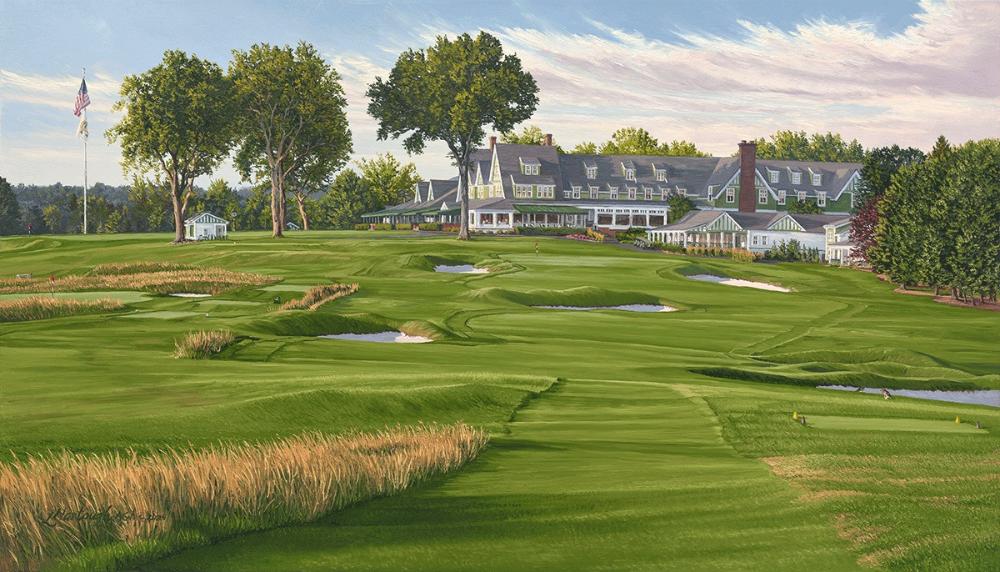
Philadelphia & Western Pennsylvania
Courses of Philadelphia & Western Pennsylvania.
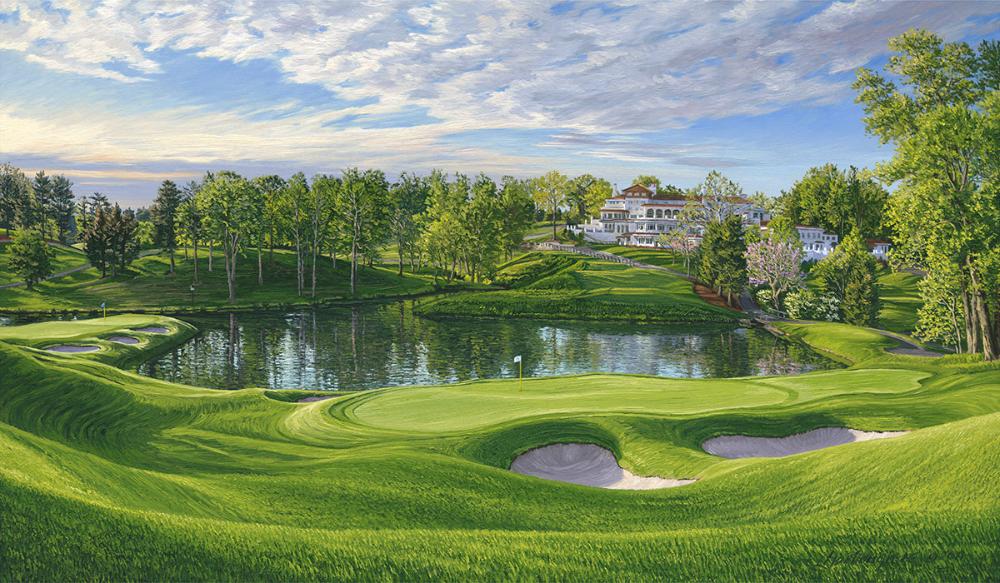
The Midwest & Mid-Atlantic
Courses of the Midwest & Mid-Atlantic.